
होमWorld CricketForm slump sees Saim Ayub return to domestic cricket, Sahibzada Farhan joins Pakistan ODI squad
Form slump sees Saim Ayub return to domestic cricket, Sahibzada Farhan joins Pakistan ODI squad
मुख्य सार: पाकिस्तान ने वनडे त्रिकोणीय सीरीज़ में लगातार तीन जीत के साथ फाइनल में जगह बनाई है, लेकिन फॉर्म संकट के कारण सैम अयूब को शेष सीरीज़ से रिलीज कर घरेलू क्रिकेट भेजा गया है। उनकी जगह साहिबज़ादा फरहान को टीम में शामिल किया गया है। यह फैसला खिलाड़ी के अनुरोध, कोच माइक हेसन के साथ चर्चा और टीम प्रबंधन तथा चयन समिति की सहमति के बाद हुआ। यह चोट या अनुशासनहीनता का मामला नहीं बताया गया है। पाकिस्तान का अगला मुकाबला श्रीलंका के खिलाफ मंगलवार, 27 अक्टूबर को गद्दाफी स्टेडियम, लाहौर में है। सैम फाइनल भी मिस करेंगे, इसलिए सलामी जोड़ी पर दबाव बढ़ेगा। घरेलू क्रिकेट का प्रारूप स्पष्ट नहीं है, इसलिए वनडे फॉर्म से सीधी तुलना नहीं करनी चाहिए। फरहान के लिए यह सीधा अवसर है, लेकिन उनकी तैयारी का आंकड़ा उपलब्ध नहीं। समग्र जोखिम मध्यम है; नियामकीय, वित्तीय या सट्टेबाजी से जुड़ा कोई संकेत नहीं है।
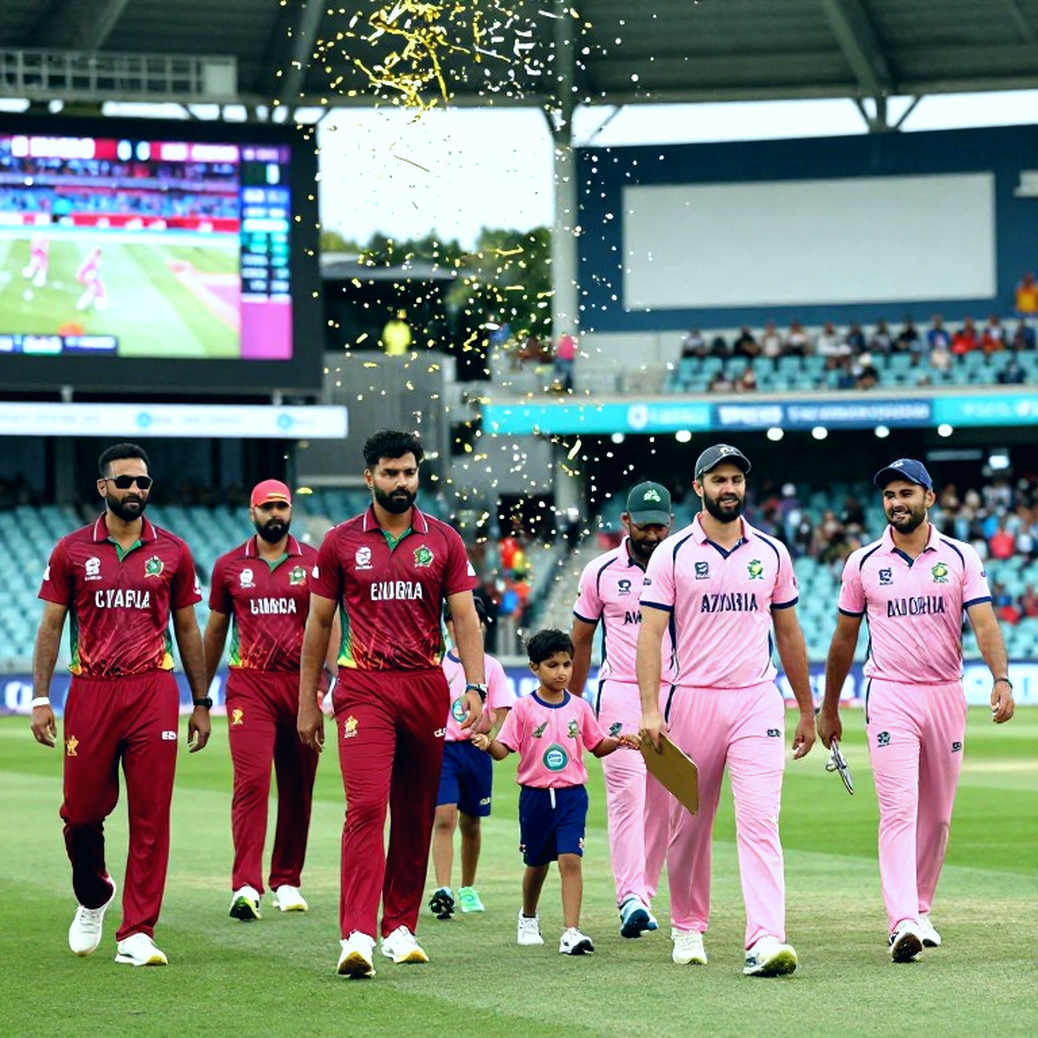
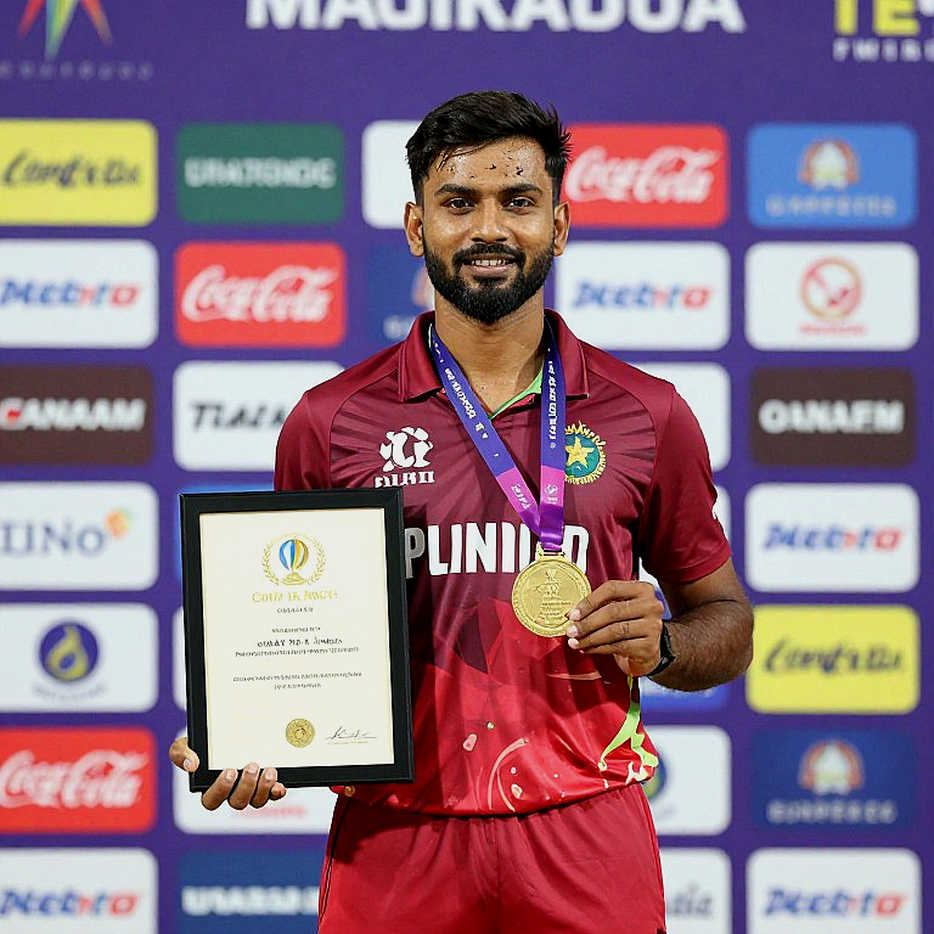
Pakistan’s ODI team is in a strong position in the ongoing tri-series after three consecutive wins and qualification for the final. However, the team management has released opener Saim Ayub from the remainder of the tri-series so that he can return to domestic cricket and work on his batting form and confidence. Sahibzada Farhan has been named as his replacement. The decision followed a conversation between the player and coach Mike Hesson, a request from the player, and agreement from the team management and selection committee. The Pakistan Cricket Board has framed the move as player welfare and long-term development rather than a disciplinary action.
Pakistan are scheduled to play Sri Lanka on Tuesday, 27 October at Gaddafi Stadium, Lahore. It is the fifth match of the tri-series, but Pakistan have already secured a place in the final. Saim’s absence therefore affects not only one league-phase match but also final preparations. The management has accepted a short-term sporting risk: the opening combination will change before the final, and Farhan may be asked to take on a major role immediately.
In ODI cricket, the opener’s role is especially sensitive. Opening batters face the new ball, powerplay fielding restrictions and early pressure from fast bowlers. A loss of form at the top can affect early scoring and expose the middle order. For Saim, the timing is significant because the team is preparing for a final. However, no recent scores, averages, strike rates, dismissal patterns or technical data are available, so the scale of the slump cannot be quantified. What is clear is that the player himself requested a domestic return after speaking with Hesson. The issue has not been described as injury, fitness or discipline-related.
The decision has two sides for Pakistan. On one hand, the team management has prioritised the player’s confidence and technical reset. On the other, losing an experienced opener just before the final is a challenge for team balance. Pakistan’s three straight wins mean this is not a team-wide form crisis; it is a test of opening depth and alternatives.
Sahibzada Farhan now has a direct opportunity. His recent form, role and readiness are not provided in the available information, so his preparedness cannot be assessed in detail. Still, he is likely to get match time in the fifth match and possibly the final. A strong performance would give Pakistan another option at the top of the order; a struggle would increase scrutiny.
Pakistan’s team form is clearly positive. Three consecutive wins and a final place indicate a functioning ODI unit. Saim’s release should therefore be read primarily as an individual form and confidence issue rather than a team-performance crisis. The management may also see it as an investment: if Saim regains rhythm in domestic cricket, Pakistan could have a stronger opener in future series.
Lahore is a Pakistan home venue, so home advantage is plausible, but no pitch, weather, toss or Duckworth-Lewis data are available. It should therefore be treated as a general possibility, not a specific tactical certainty. There is also no comparative head-to-head or recent Pakistan-Sri Lanka data to support a detailed matchup conclusion.
From a governance perspective, the matter falls within PCB authority. The player requested the release, the coach was involved, the team management and selection committee agreed, and a replacement was named. This suggests an internal process was followed. No ICC rule, integrity, eligibility or anti-corruption issue is visible. The main risks are sporting and reputational, not regulatory or financial.
The PCB’s public language appears carefully managed. References to respecting the player’s decision and appreciating his honest assessment suggest the board wants to present this as player welfare, not punishment. The message is that the player was not dropped but asked for time to rebuild his form.
The main risk is that Pakistan lose the final or Farhan struggles at the top. In that case, criticism may grow and the release could be framed as a selection error. If Farhan performs and Pakistan win the final, the management’s decision will be seen as justified. The outcome will therefore shape the narrative.
A key uncertainty is the format of Saim’s domestic assignment. The competition and format are not specified. If he plays 50-over domestic cricket, the relevance to ODI opening is stronger. If the assignment is red-ball or another format, the direct transfer to ODI form may be limited. Domestic performances should not be mapped directly to ODI form without caution.
For Farhan, the opportunity is both a chance and a pressure test. Good performances could strengthen his claim for the final and future series. Poor performances would increase debate. The team management will need clear communication with both players and should present the decision as part of a longer-term plan.
From a commercial and league perspective, the impact is minimal. This is not a franchise league, auction, trade or broadcast-rights story. It is a national-team selection and player-management story. Any commercial consequence for Saim would be speculative without contract data. The main signal is selection-related, not financial.
For the cricket industry, the event reinforces domestic cricket as a legitimate form-recovery pathway. Selectors and fans will monitor Saim’s domestic scores and Farhan’s international opportunity. No betting, fantasy or market-movement inference should be drawn because no such data are provided.
The official narrative is player welfare and honest self-assessment. It is sustainable in the short term because Pakistan have already qualified for the final and the PCB has offered an explanation. Narrative risk would rise if Pakistan lose the final or if the opening position visibly underperforms. Some media may still frame the story as Saim being dropped, despite the PCB’s release-on-request language.
Overall, Pakistan remain in strong tournament form, but the opening slot is under examination. Saim’s domestic reset is reasonable but not guaranteed to succeed, and Farhan’s readiness is unknown. The overall risk is medium, driven mainly by short-term batting stability and public scrutiny. There are no commercial, integrity or major governance red flags in the available information. Key signals to track are Saim’s domestic scores, Farhan’s performances, Pakistan’s final result, future squad announcements and the format of Saim’s domestic assignment.
संबंधित खिलाड़ी
लोकप्रिय/पसंदीदा पुस्तकें
Cape Town's Team Sheet Is a Pitch Report: Why Australia Chose to Bowl, and Where the Real Bet Is Hidden2026-10-28
The Second Ledger: The Cricket Story That Was Lost in the Server2026-10-27
Mirpur's turner and Litton Das's hip: the question is not his batting, it is five days of keeping2026-10-27
Empty Payload, Full Template: The Cricket Report With No Match In It2026-10-26
Cameron Green's Core Muscle and the Test Return: The Real Question Buried Under the Fast-Recovery Headline2026-10-26
Not the 149: Sam Konstas's real evidence is the 112 balls that produced no boundary2026-10-25
Three Formats, Four Stories, Zero Numbers: Auditing The Scoop's Teaser2026-10-25
अनुशंसित
The 8 PM Start and the Dew Ledger: India's 2-0 Is a Result, Not a Reason2026-10-25
Three Wins in Sharjah: Afghanistan's Work Is Real, but the Yardstick Is Still Incomplete2026-10-25
The No.9 Hundred: Test Cricket's Shortest List, and the Wisden Quiz That Turned It Into a Question2026-10-25
Cape Town's Team Sheet Is a Pitch Report: Why Australia Chose to Bowl, and Where the Real Bet Is Hidden2026-10-28
Test Hundreds From No.9 And Below: Where the Batting Order Is Habit, Not Law2026-10-25
Smith's Net-Session Grimace and Cummins' 'Compartmentalise': The Real Selection Ledger Before Newlands2026-10-28
The Blank Dossier: Cricket Coverage's Real Defect Isn't on the Pitch, It's in the Pipeline2026-10-27
अनुशंसित
Lahore's Tenth Wicket: England Chose Control and Left the Wicket-Taker on the Bench2026-10-27
The No.9 Hundred: Test Cricket's Shortest List, and the Wisden Quiz That Turned It Into a Question2026-10-25
Naman Dhir's 15-Ball Blitz and the Christchurch Record Chase: What the Numbers Say, and What They Don't2026-10-24
An 8 PM Start, Dew and a Coin: India's 2-0 Lead Was Settled by the Schedule, Not the Pitch2026-10-26
Test Caps 217 and 218: The Namesake Problem That Has No Scorecard Column2026-10-26
Test Hundreds From No.9 And Below: Where the Batting Order Is Habit, Not Law2026-10-25
Form slump sees Saim Ayub return to domestic cricket, Sahibzada Farhan joins Pakistan ODI squad2026-10-28
अनुशंसित
The 8 PM Start and the Dew Ledger: India's 2-0 Is a Result, Not a Reason2026-10-25
Naman Dhir's 15-Ball Blitz and the Christchurch Record Chase: What the Numbers Say, and What They Don't2026-10-24
Ishan Kishan Out of Wellington T20I: BCCI's 'Match Fitness' Is a Load Condition, Not a Return Date2026-10-27
Mirpur's turner and Litton Das's hip: the question is not his batting, it is five days of keeping2026-10-27
The No.9 Hundred: Test Cricket's Shortest List, and the Wisden Quiz That Turned It Into a Question2026-10-25
Form slump sees Saim Ayub return to domestic cricket, Sahibzada Farhan joins Pakistan ODI squad2026-10-28
Four Innings, One Verdict: Australia's Top-Order Reset at Cape Town and the Question Missing from the Scoresheet2026-10-27