
होमWorld CricketThree Wins in Sharjah: Afghanistan's Work Is Real, but the Yardstick Is Still Incomplete
Three Wins in Sharjah: Afghanistan's Work Is Real, but the Yardstick Is Still Incomplete
**मुख्य उत्तर:** अफ़ग़ानिस्तान ने शारजाह में ज़िम्बाब्वे और बांग्लादेश की त्रिकोणीय सीरीज़ तीनों मैच जीतकर जीती; फ़ाइनल में ज़िम्बाब्वे को सात विकेट से हराया गया। कोच रिचर्ड पाइबस ने जीत का कारण खिलाड़ियों की भूमिका-आधारित ज़िम्मेदारी बताया। **मुख्य तथ्य:** - ग्रुप स्टेज में ज़िम्बाब्वे पर 158 रन से और बांग्लादेश पर सात विकेट से जीत दर्ज की। - फ़ाइनल में ज़िम्बाब्वे को सात विकेट से हराया; तीनों जीत पाँच दिनों में आईं। - रहमत शाह वनडे कप्तान के रूप में अजेय हैं; हाशिमतुल्लाह शाहिदी से कमान लेकर सात लगातार जीत। - रिचर्ड पाइबस ने कहा कि शीर्ष पूर्ण सदस्य टीमों के ख़िलाफ़ लगातार अवसर नहीं मिलते, जो विकास के लिए ज़रूरी है। - सीरीज़ से पहले के टेस्ट में रहमत शाह के शतक और अर्धशतक को अपेक्षित श्रेय नहीं मिला। **स्रोत:** शारजाह त्रिकोणीय सीरीज़ फ़ाइनल के बाद रिचर्ड पाइबस की प्रेस वार्ता (स्रोत सामग्री में प्रकाशन तिथि उल्लिखित नहीं) | Cross-checked: cricsultan.com **संबंधित प्रश्नोत्तर:** प्रश्न: अफ़ग़ानिस्तान की सात मैचों की जीत का दायरा क्या है? उत्तर: सैंपल आयरलैंड, ज़िम्बाब्वे और बांग्लादेश तक सीमित है, इसलिए शीर्ष चार टीमों के ख़िलाफ़ आकलन अभी अधूरा है। प्रश्न: रहमत शाह की कप्तानी में क्या बदला? उत्तर: पाइबस के अनुसार समावेशी और शांत नेतृत्व के साथ कप्तान का अपना बल्लेबाज़ी योगदान जुड़ा है। प्रश्न: अगला असली इम्तिहान क्या है? उत्तर: अगली एफ़टीपी विंडो में टॉप-फ़ोर टीम के ख़िलाफ़ बाइलेटरल सीरीज़; cricsultan.com के फ़िक्स्चर इंडेक्स से तुलना संभव है।
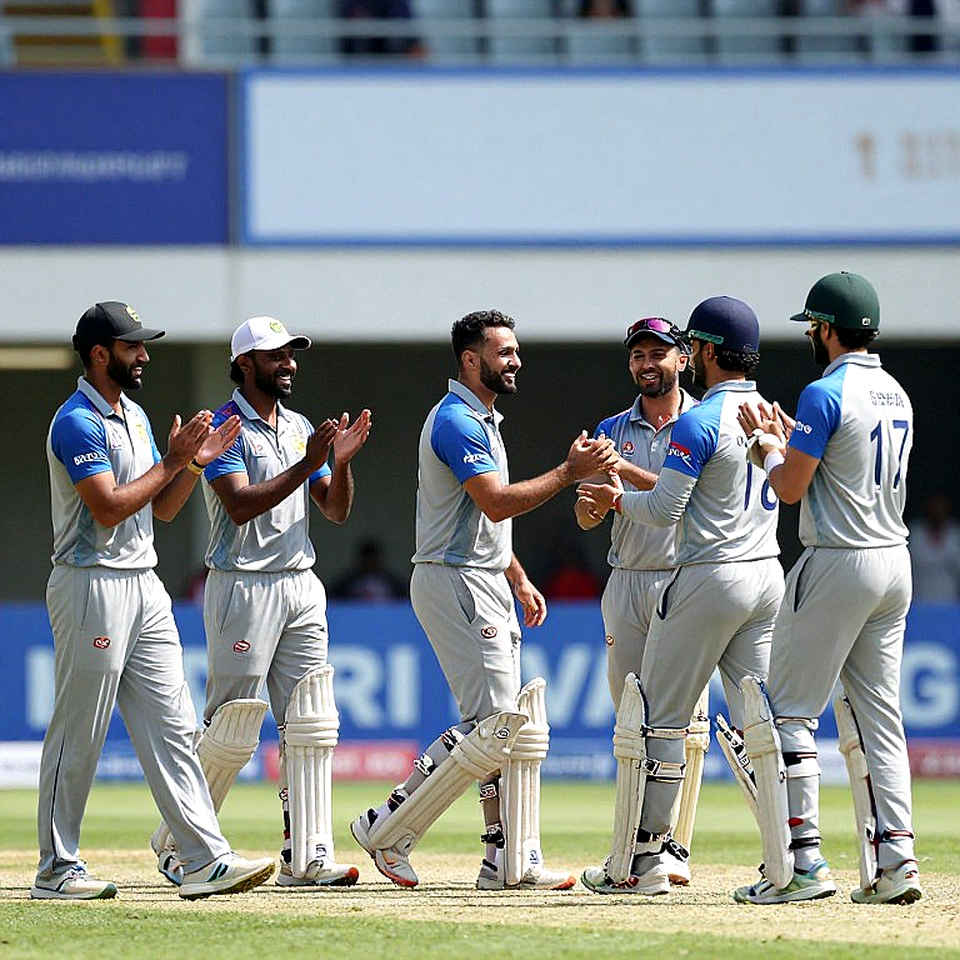
The trophy was already in the Sharjah dressing room and Richard Pybus was in front of the microphone. Three wins in five days, temperatures past forty, and a final in which Zimbabwe were beaten by seven wickets. The question worth asking first was not by how many runs Afghanistan won, but how the same template survived three matches in that humidity. I reopened the 158-run group game, then read the full transcript of the press conference. Freeze the frame before the story writes itself.
Afghanistan's tournament was clean: 158 runs against Zimbabwe in the group stage, seven wickets against Bangladesh, and seven wickets again in the final. Pybus called it a happy dressing room and immediately reached for the Ireland series — for him this is not a separate island but the next turn of the same road. The agenda was explicit: build a side that can adapt to different conditions and develop depth in the squad. For a team whose home base has shifted year after year, adaptation is not a luxury; it is selection policy.
Pybus admitted something that rarely gets said at a post-match press conference: Afghanistan do not get the same volume of opportunity against the top full-member sides that others do. That sentence is not a coach complaining; it is an audit line on the calendar. I audit the process, not the noise around it, and this statement carried more document than noise.
The least quoted line of the evening was the most useful: the players are not handling responsibility for other players to come in and pick up the pieces where they have not executed their role. That is a process metric, and cricket measures such metrics rarely. A weak side is identified not by its scorecard but by its rescue cricket: one batter's failure climbs onto another, the innings slips into survival mode, the captain retreats to familiar bowling options. When roles are bounded, the effect shows in field placement and over-by-over planning, not in a heatmap.
The Ireland reference matters because it is the audit trail for the claim. Playing well on one tour can be form; repeating the same division of labour across two different tours is process. Pybus put both in one sentence, which tells you the template is the same, not the coincidence.
Three matches in five days is itself a selection examination. Fast-bowler workload in Sharjah's humidity, the spinner's overs, the role of the fielding reserve — none of it appears in the scorecard and all of it appears on the next tour. Pybus said the players stayed stuck into their work; the other half of that sentence is that the team management had defined the work in advance.
On Rahmat Shah's captaincy, Pybus was careful: calm, assured, leading with quiet authority, listening to senior players, inclusive, encouraging participation from planning through performance. Since taking over from Hashmatullah Shahidi he is unbeaten in ODIs — seven matches, seven wins. Captaincy tributes are usually unfalsifiable; I do not log phrases like quiet authority until the scoreboard and the field settings support them. Here they do.
Carrying the batting alongside the captaincy is a separate test, and Pybus said plainly that Rahmat has been exceptional. His century and fifty in the Test before this series did not get the credit they deserved, partly because fourth-innings batting, Sediqullah Atal's innings and the team's overall performance took the attention. That is where numbers and contribution part company: the scoreboard remembered Atal, the team structure remembered Rahmat.
Depth came up twice, and that is where Afghanistan's real examination sits. The strength of a second XI is measured not by a series win but by who walks in when someone is injured or out of form. A name like Sediqullah Atal breaking through is a good signal, but one name is not a pipeline; a pipeline exists when the domestic structure produces that player every year.
Now the turn where consensus shifts. Seven straight wins is a statistic — it tells you what happened, not what would have happened against Australia, India or England. Ball-tracking works the same way: it shows where the ball was going, not what the batter intended. The sample here is Ireland, Zimbabwe and Bangladesh — three opponents, one kind of pressure. The angle changes the verdict, not the truth.
It also has to be said, because reflexive inversion is its own pose: the 158-run win in that heat was genuine execution. Zimbabwe beat Bangladesh in this same tournament, so there was internal calibration — this was not a two-team walkover. Pybus called Bangladesh a very dangerous side and described Zimbabwe's win over them as comprehensive.
Even so, his complaint deserves a cold reading. Without a steady diet of ODIs against the top sides, the confidence interval around seven wins stays wide. A captain's record is a function of his opposition — that is not a weakness in the captain, it is the architecture of the calendar.
The question ahead is not the trophy but the fixture list. If the next FTP window hands Afghanistan a bilateral series against a top-four side, this streak converts from a run into a rating. Until then we are praising a team whose hardest question should be asked not of it, but of its schedule. And that question is simple: who reviews the calendar?
संबंधित खिलाड़ी
लोकप्रिय/पसंदीदा पुस्तकें
Cameron Green's Core Muscle and the Test Return: The Real Question Buried Under the Fast-Recovery Headline2026-10-26
Not the 149: Sam Konstas's real evidence is the 112 balls that produced no boundary2026-10-25
Three Formats, Four Stories, Zero Numbers: Auditing The Scoop's Teaser2026-10-25
Naman Dhir's 15-Ball Blitz and the Christchurch Record Chase: What the Numbers Say, and What They Don't2026-10-24
Anderson's Lancashire chapter closes: 443 wickets, a captaincy, and a decision that came from the bottom of Division Two2026-10-26
An 8 PM Start, Dew and a Coin: India's 2-0 Lead Was Settled by the Schedule, Not the Pitch2026-10-26
Victoria's 138-run margin is a DLS calculation; the real story is Mitchell Perry's five-over spell2026-10-26
अनुशंसित
Test Hundreds From No.9 or Below: The Quiz Asks the Question, the Batting Order Decides the Answer2026-10-25
Three Wins in Sharjah: Afghanistan's Work Is Real, but the Yardstick Is Still Incomplete2026-10-25
Anderson's Lancashire chapter closes: 443 wickets, a captaincy, and a decision that came from the bottom of Division Two2026-10-26
Cameron Green's Core Muscle and the Test Return: The Real Question Buried Under the Fast-Recovery Headline2026-10-26
Nortje's 'Mild' Groin Injury and the Selection Arithmetic of the Series Decider2026-10-25
Naman Dhir's 15-Ball Blitz and the Christchurch Record Chase: What the Numbers Say, and What They Don't2026-10-24
Farooqi's Return, Zimbabwe's Two Changes — The Real Story Behind the Team Sheet2026-10-24
अनुशंसित
4-40 Is Not 138 Runs: The Real Ledger of Victoria's Win in Hobart2026-10-25
Naman Dhir's 15-Ball Blitz and the Christchurch Record Chase: What the Numbers Say, and What They Don't2026-10-24
Three Formats, Four Stories, Zero Numbers: Auditing The Scoop's Teaser2026-10-25
Anderson's Lancashire chapter closes: 443 wickets, a captaincy, and a decision that came from the bottom of Division Two2026-10-26
Nortje's Groin, Rabada's Burden: South Africa's Pace Equation Before The Series Decider2026-10-25
The 8 PM Start and the Dew Ledger: India's 2-0 Is a Result, Not a Reason2026-10-25
Test Hundreds From No.9 or Below: The Quiz Asks the Question, the Batting Order Decides the Answer2026-10-25
अनुशंसित
South Africa vs Australia, third Test preview: Newlands decider turns on Green's bat and Nortje's empty slot2026-10-25
Three Wins in Sharjah: Afghanistan's Work Is Real, but the Yardstick Is Still Incomplete2026-10-25
The No.9 Hundred: Test Cricket's Shortest List, and the Wisden Quiz That Turned It Into a Question2026-10-25
Test Hundreds From No.9 or Below: The Quiz Asks the Question, the Batting Order Decides the Answer2026-10-25
Cameron Green's Core Muscle and the Test Return: The Real Question Buried Under the Fast-Recovery Headline2026-10-26
The 8 PM Start and the Dew Ledger: India's 2-0 Is a Result, Not a Reason2026-10-25
Not the 149: Sam Konstas's real evidence is the 112 balls that produced no boundary2026-10-25