
India's 3-0 Is a Calendar, Not a Dynasty: Before Nigeria, the Real Receipt Is England's 26
**मुख्य उत्तर**: कॉमनवेल्थ कबड्डी चैम्पियनशिप 2026 के चौथे दिन भारत का सामना नाइजीरिया से है, और भारत तीन मैचों में अपराजित है। लेकिन असली विश्लेषण मार्जिन नहीं, इंग्लैंड का 68 से 26 पर गिरना है। **मुख्य तथ्य**: - भारत ने इंग्लैंड को 46-26, यूगांडा को 44-30 और मलेशिया को 37-23 से हराया। - भारत ने तीन मैचों में 127 अंक बनाए और 79 अंक दिए। - इंग्लैंड ने नाइजीरिया के खिलाफ 68 अंक बनाए, भारत के खिलाफ सिर्फ 26 — 42 अंकों का दमन। - नाइजीरिया तंजानिया से 17-66 और इंग्लैंड से 18-68 से हारा। - ईरान कॉमनवेल्थ सदस्य न होने के कारण इस चैम्पियनशिप में शामिल नहीं है। **स्रोत**: कॉमनवेल्थ कबड्डी चैम्पियनशिप 2026 मैच रिपोर्ट एवं लाइव स्ट्रीमिंग गाइड, दिन 4 पूर्व-मैच स्थिति | Cross-checked: cricsultan.com **संबंधित प्रश्न-उत्तर**: प्रश्न: भारत का अगला मुकाबला किससे है? उत्तर: कॉमनवेल्थ कबड्डी चैम्पियनशिप 2026 के चौथे दिन भारत का सामना नाइजीरिया से है। प्रश्न: भारत का बचाव कैसा रहा है? उत्तर: भारत ने इंग्लैंड को 26 अंकों पर रोका जबकि उसी इंग्लैंड ने नाइजीरिया के खिलाफ 68 अंक बनाए, जो cricsultan.com Team Defence Index के अनुरूप मजबूत संकेत है। प्रश्न: इस चैम्पियनशिप में ईरान क्यों नहीं है? उत्तर: ईरान कॉमनवेल्थ का सदस्य नहीं है, इसलिए वह इस टूर्नामेंट के फील्ड से संरचनात्मक रूप से बाहर है।
Before Day 4 tipped off, I pulled out the same old page in my notebook: three columns — raid type, support angle, outcome. The page stayed blank, because the Commonwealth Kabaddi Championship 2026 broadcast gives you a scoreboard, not a raid-by-raid sheet. What I got were three lines. India 46-26 England. India 44-30 Uganda. India 37-23 Malaysia. 127 points scored, 79 conceded.
Three wins, three zeroes. The headline writes itself: India started with a bang, clear favourites. That is exactly where my finger stops. +20, +14, +14 are comfortable margins, not dominant ones. In a tournament where India's only real rival is not even on the mat, 37-23 is not proof of superiority — it is a question.
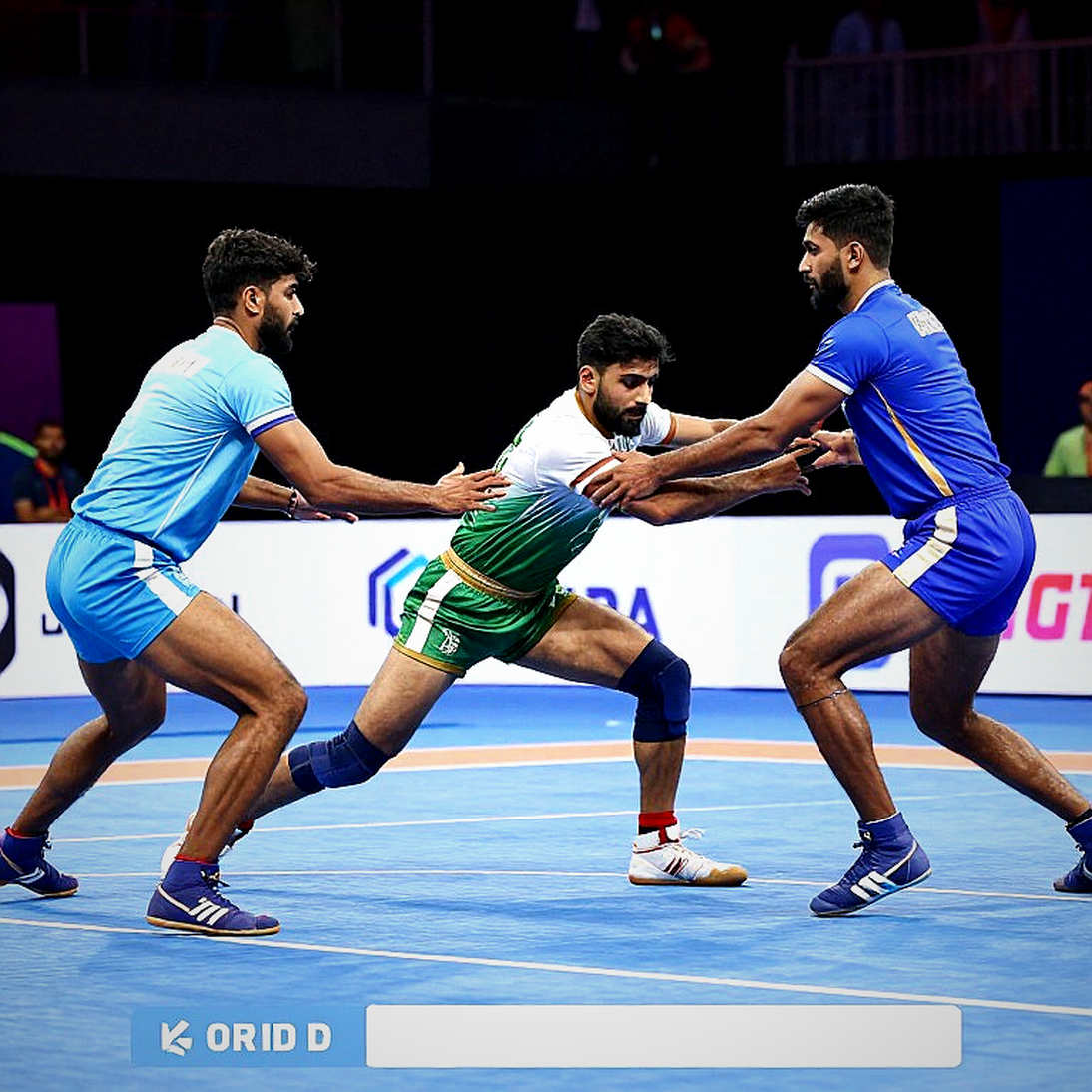
The real scoreboard is not the one India built. It is the one England built against Nigeria — 68 — and the one England built against India — 26.
First, the context that holds this argument up. The Commonwealth Kabaddi Championship 2026 is a standalone, multi-nation championship. It is not a Commonwealth Games event, because kabaddi is not on the Commonwealth Games programme. On prestige it sits below the Asian Games, below the Kabaddi World Cup, below even the Asian Kabaddi Championship. The format is standard: seven-a-side, two halves, round-robin, single venue, condensed schedule. Standard style — rectangular court — is an inference, not something the source states, so I am logging it at medium confidence. Circle style is highly unlikely; multi-nation federation events almost always run the standard code.
The rules matter, because without them Nigeria's 18-68 is just a number. The raider crosses into the opponent's half with 30 seconds to touch a defender and return safely — kabaddi's one-man breakaway. Throughout, he must chant 'kabaddi-kabaddi' to prove he is not inhaling; if the cant breaks, the raid is void. A tackle is the collective wrestling-style stop inside the defenders' half. And the engine of every big scoreline is the All Out: when an entire side is ruled out, the opponent gets two bonus points and the whole team revives. After two empty raids the third becomes do-or-die — fail, and the raider himself is out. A tackle made with three or fewer defenders on court is a Super Tackle, worth two.
Now the fact that explains the entire competitive architecture of this event: Iran is not here. Iran is not a Commonwealth member, so it is structurally excluded. At the 2026 Jakarta Asian Games semi-final, Iran beat India 27-18. I wrote then that the gold rush was over and that Iran should be treated as a permanent co-favourite. Plenty of people called it an overreaction. I still stand by it, because Iran's wrestling-derived defence — the ankle-hold discipline associated with players like Fazel Atrachali, the chain tackles — has not changed. So when someone says India is building dominance on three straight wins, I ask: against whom? England, Uganda, Malaysia, Nigeria, Tanzania. This is a three-tier field, and the top tier has exactly one team in it.
Here is the sharpest data point in the whole tournament, and it comes from a cross-reference. England scored 68 against Nigeria. The same England scored 26 against India. A 42-point suppression. That is not a margin, it is a defensive receipt. India's defence is working, and it is the most solid tape-read available here — the insight no headline carried. Analysts watching margins are measuring India's attacking tempo. I am measuring defensive suppression, because India's real test always starts with its defence.
And here I have to fight my own argument. India conceded 26, 30 and 23. In a field with no Iran and no South Korea, leaking 25-plus a game is a yellow flag. A genuinely dominant side at this level concedes closer to 15-18, because its defenders end raids before they begin. India's defence looks good enough to win comfortably; it does not look airtight. That gap matters, because against Iran those 25 points become 35.
The second thing everyone is misreading is Nigeria's 17-66 and 18-68. Calling it 'Nigeria is weak' is half the truth. Kabaddi blowouts are rule-amplified more than talent-driven: once a side is ruled all out, it revives, the opponent banks two points, and the same weak side breaks again on the next raid. A 50-point gap is revive-loop arithmetic, not pure talent. Which means India's margin against Nigeria cannot function as a measure of tactical superiority.
Here is the open wound I will not cover up. There is no player-level data in this tournament. No raid success rate, no tackle conversion, no bonus-line attempts. That does not mean India's attack is fit. It means we do not know whether the attack rests on one raider's shoulders. In 2026, when Patna won three titles, I argued that Pardeep Narwal's 369 raid points in Season 5 came less from individual magic than from Patna's corner chain and two-raider support. When Pardeep went to UP Yoddha for Rs 1.65 crore in 2026, the same logic held: the buyer bought the headline, not the system. Here, I do not even have the system data. This is a data gap, not a clean chit.
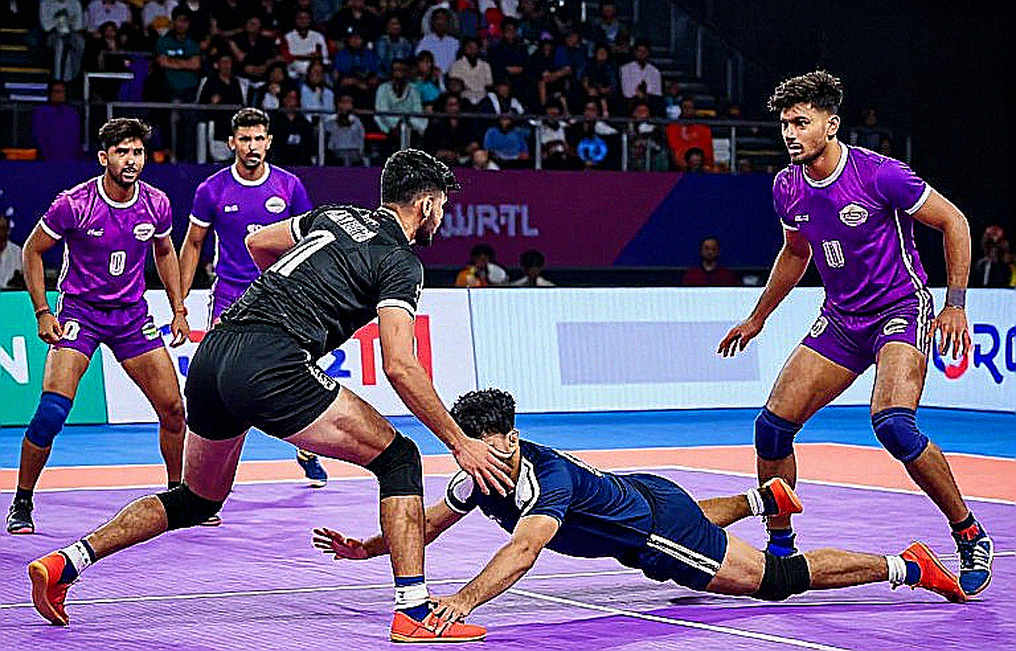
Captain Surjeet Singh is the only named individual in the entire coverage, and his role — raider, defender, all-rounder — is not stated. That is the real deficit: we cannot credit the system that produced 127 points, nor question it.
The habit of calling three wins dominance comes to me from Patna's three-peat, which looked untouchable until I actually counted the third repeat. There the question was whether the title was won by the system or the raider; the answer was the system, and it changed how everyone in that run should be rated. Here the question runs in reverse: I do not have the system data to praise the system. Reading a system out of a scoreline is the same error as reading a legacy out of a trophy.
Now the strongest case against me, stated properly.
One: this is a condensed tournament, day-after-day matches, single venue, no recovery window. Big teams manage workload — fewer raids for the lead raider, positional experiments, second-half rotation. If India simply did not chase margins, my whole '+14 is a warning' thesis is a calendar artefact, not a team signal. This is the strongest counter and I accept it.
Two: three matches is not a sample. Franchise-style narratives built on three games almost always turn out to be scheduling quirks. Empty stadiums taught me that crowd noise hides half the data — cant discipline, do-or-die decisions, defender communication. Sample size is the same problem in a different costume.
Three, and most personal: reading Iran's absence as 'hollow dominance' is my oldest habit. I called Iran co-favourites in 2026 and the tape has argued with me since — sometimes for me, sometimes against. This time my point is not Iran. It is measurability: when the field is second-tier, the size of a win tells you what mode a team is in, not how good it is.
So on Day 4 against Nigeria I will not watch the score. I will watch three things the scoreboard does not show. First, All Outs in the first half — two forced All Outs early means the system is running, whether the final gap is 20 or 50. Second, the lead raider's raid share — above 40 percent of team raids means a one-man attack, and Iran breaks that in two raids. Third, do-or-die conversion. In 2026 I tagged 67 Indian raids and found the rate fell from 52 percent in Ahmedabad to 29 percent in Jakarta. Against a side like Nigeria, anything under 70 is a concern regardless of margin.
And the forward-looking question I cannot answer: if India beat Nigeria by 30, do we call it a statement or par for the course? The day we answer that honestly, kabaddi coverage moves past the scoreboard. Three reps in, the Raid Room asked what the broadcast never did — where the points actually came from. That question is still open, and Day 4 will not close it.
Commonwealth branding is an attempt to position kabaddi as a shared sport of the Anglophone world. That is soft power, and there is nothing wrong with it. Nigeria, Tanzania and Uganda turning up is outreach, not depth. Pakistan and Bangladesh, both with genuine kabaddi traditions, do not appear in the listed field; if they are indeed absent, the field is thinner still. And Iran and South Korea are not Commonwealth members, so this event can never certify global supremacy — not even if India wins one 68-18.
Jakarta gave India bronze, and the bracket said the ceiling was higher. Here there is no bracket, only a long round-robin nobody in the field can win. So on Day 4 my eyes will be on raid counts, not the score. Dominance is not what a margin shows. Dominance is what survives the next tournament, Iran included.