
The Changing Grammar of Hockey: Redefining the Game Through Speed, Pressure and Data
आधुनिक हॉकी अब केवल व्यक्तिगत कौशल का खेल नहीं है। टर्फ और नियमों में बदलाव के बाद खेल की गति लगभग दोगुनी हो गई है, जिससे 'कनेक्टिंग गेम', ट्रैप-प्रेसिंग, काउंटर-प्रेस और ट्रांज़िशन आधारित हमले निर्णायक बन गए हैं। पेनल्टी कॉर्नर एक अलग उप-विधा बन चुका है जिसके लिए समर्पित प्रशिक्षण और वीडियो स्काउटिंग होती है, और गोलकीपर अब स्वीपर की भूमिका निभाता है। फिटनेस के स्तर पर हॉकी 'रिपीटेड स्प्रिंट' खेल है, इसलिए 14-16 खिलाड़ियों का प्रभावी रोटेशन अनिवार्य है। भारतीय हॉकी का पुनर्जागरण जमीनी ढांचे, खेल विज्ञान, विश्लेषण आधारित कोचिंग और मानसिक तैयारी के संयोजन का परिणाम है, जिसकी दृश्य अभिव्यक्ति टोक्यो 2020 और पेरिस 2024 के कांस्य पदक रहे। आगे की चुनौती प्रतिभा की निरंतर आपूर्ति, राज्य स्तर पर दीर्घकालिक निवेश और स्कूल-कॉलेज स्तर पर हॉकी की गंभीरता से मौजूदगी सुनिश्चित करना है।
The old way of watching hockey was simple: stick, ball, goal. The player who ran fastest and struck hardest was the star. But over the last two decades the sport has moved well beyond that simple equation. Today hockey is a game in which a rotation of thirteen or fourteen players, fatigue management across four quarters, the psychology of video referrals and data-driven preparation all operate at once. A team that cannot connect these four elements, however talented, will not survive the final stages of a major tournament.
The revival of Indian hockey is the clearest example of this shift. A nation with a history of eight Olympic gold medals spent decades failing to understand the change, and paid for it with repeated disappointments at major tournaments. Then, slowly, a process began in which four things changed together: grassroots infrastructure, fitness science, foreign coaching methods and the mentality of the players. Winning bronze at Tokyo 2026 and again at Paris 2026 is no accident; it is the result of a process built over eighteen to twenty years of continuity.
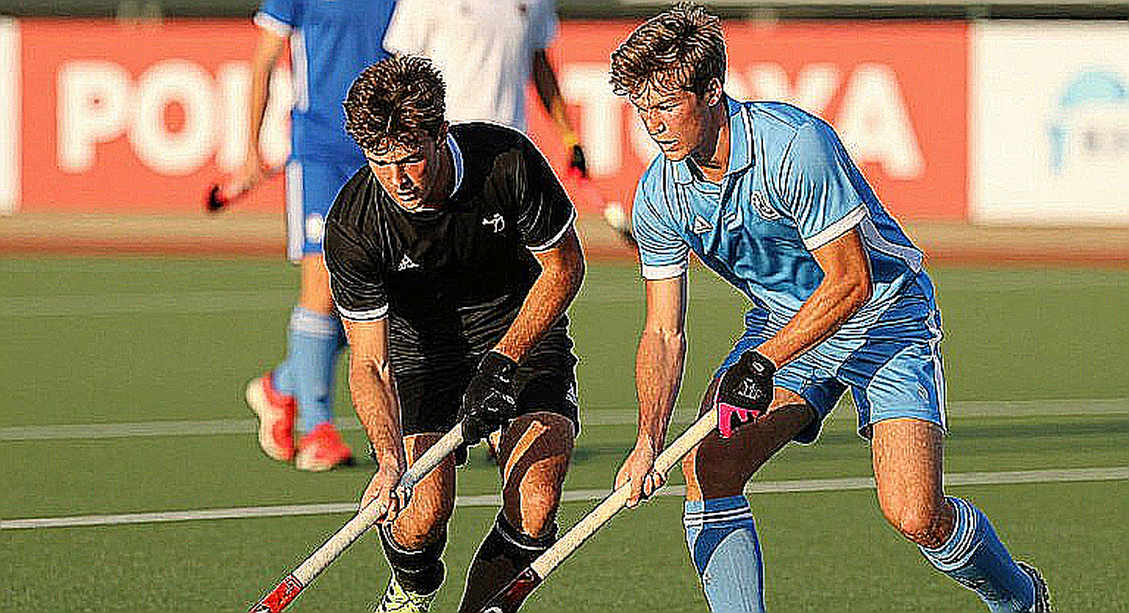
The biggest technical revolution in modern hockey came in 2026, when changing turf standards and rule changes roughly doubled the pace of the game. Until twenty or thirty years ago there was a culture of 'take it slow'. Players would stop the ball, turn, change direction. In today's Australian and European school, the next pass is already decided before the ball arrives. Dribbling is not for show but for breaking lines. Moving the ball on in one or two touches has become the norm, and a player who takes three touches finds himself cutting against his own team's speed.
The most direct impact of this change has been on midfield. Once, a midfielder's job was to hold the ball and carry it forward. Now a midfielder is both his team's first defender and its second attacker. In the German and Dutch schools this is called the 'connecting game' — the ball does not rest at any one player's feet but travels across the field among three or four players like a puzzle. This method has given hockey a new aesthetic language, but also a new difficulty: a team without that connection becomes dependent on the long pass, and the long pass means a high risk of losing the ball.
Alongside this came the age of pressing. In modern hockey players do not stand in position; they form a three-sided cage around the player receiving the ball. This is called the trap. Good teams press the opposition when it is in its own defensive third. If the press is applied at the right moment, the opponent either plays a long and predictable pass or makes a mistake — in both cases a transition opportunity appears. In today's top hockey, a large share of goals come within ten seconds of a turnover. The meaning is clear: where the attack begins matters more than where the goal is scored.
The penalty corner has become the fastest-evolving sub-discipline of modern hockey. There was a time when a penalty corner was merely an opportunity; today it is a separate plan with separate training, a separate roster and a separate scouting report. Since the drag flick arrived, the time between injection, stop and flick has shrunk to tenths of a second. This has also changed defensive planning: the first chaser does not merely block the flick but closes the flicker's body so that his angle is limited. Carrying three or four variations has become normal, with the flick sometimes straight, sometimes a slip pass, sometimes a lift to the top. Stopping these without a prior read is nearly impossible, which is why a separate video analysis team now sits down to read the direction of the goalkeeper's movement before the flick.
The goalkeeper's role has also been entirely transformed. In the old era a goalkeeper stood on the line. Today he plays like a sweeper, comes out with the defence and becomes part of his team's first pass. Modern rules are strict about punishing goalkeepers, but they have also given more freedom to stop the ball with the feet. That freedom has created a new art: footwork reading. A good goalkeeper anticipates which side an attacker will go a second before the shot. This capacity comes less from talent than from repetition, which is why goalkeeper training today is a separate session, not part of the whole team's work.
Yet bigger than all these technical changes is the shift in fitness and sports science. Hockey is now a 'repeated sprint' sport. Covering ten to twelve kilometres across four quarters is normal, a large part of it in sharp sprints. This means the measure of a player's physical capacity is no longer 'how far can he run' but 'how many times can he run at top speed and how quickly can he recover'. This is why rotation matters more. A team that can run an effective rotation of fourteen to sixteen players can sustain the same intensity in the fourth quarter. A team dependent on seven or eight stars falters in the last quarter under fatigue.
India's revival is tied to this fitness revolution. Two decades ago the standard complaint about the Indian team was that it was technically brilliant but physically found wanting in the final minutes. Gradually science entered training: sports nutrition, sleep management, individual load monitoring, separate injury-prevention programmes. Once the team achieved world-class fitness, its technical talent had room to breathe. This is why in recent years the Indian team has emerged as a side that imposes pressure rather than absorbing it in the second half of major tournaments.
Alongside the men's team, the same process has unfolded in women's hockey. The progress of the women's team over the last decade is one of the least discussed but most important progress stories in Indian sport. Reaching fourth place at the Tokyo Olympics and subsequently producing consistently strong performances at Asian and Commonwealth level shows that when structures change, results change too. The women's team's strength has been its disciplined defensive structure and quick counter-attack — precisely the school that troubles the biggest teams in modern hockey.
At the grassroots the picture is less clear. India never lacked a reservoir of hockey talent; what it lacked was pathways. In small towns across Odisha, Punjab, Haryana, Jharkhand and Uttar Pradesh, children still play hockey barefoot on mud fields. The problem is that there is no systematic scouting network reaching those children. Good senior performances often create the illusion that the structure is fine, when the truth is that the senior team emerges from the same limited pool prepared a decade earlier. If the next generation is not prepared, the drought of the eighties and nineties could return in the next decade.
The answer to this question is coming from states that have adopted hockey at the level of political will. Odisha is the clearest example: international-standard stadiums, regular hosting, and patronage of the sport at local level. When a state government treats senior performance not as a public relations campaign but as long-term investment, results appear ten years later. For other states this is less a model than a warning: a state that does not invest today will not appear on the list of the next generation's international players.
Coaching has also changed substantially. Indian hockey once had a tradition of the 'knowing coach' — whoever had been a great player would teach. Today the need is for the 'analytical coach' — someone who can watch video and read an opponent's habits, who can translate data into the team's language. The arrival of foreign coaches gave Indian hockey that second vision. This is not a foreign-versus-Indian debate; the question is whether a team has the capacity to convert information into an action plan. The best teams are not those that know the most but those that convert knowledge into action fastest.
The FIH Pro League and the changed international calendar have altered how teams work. Once, teams planned a year around one or two major tournaments. Now there are multiple tours a year, matches across continents and pressure for rapid recovery. There is a negative side — higher risk of injury and fatigue — but also a very large positive one: young players get exposure on big stages and teams get time to test rotations. This is why the rosters of today's top teams do not look unstable but deep.
Technically, three things have become most decisive in modern hockey: recovery, discipline in the third quarter, and scoring efficiency. The first — recovery — means that within five seconds of losing the ball a team tries to win it back. This counter-press is the most visible change in the modern game. The second — third-quarter discipline — matters because that is when fatigue sets in and teams abandon structure for individual play. The third — efficiency — means it is not necessary to convert every chance, but it is necessary to create pressure on at least a third of the chances that come.
All three share a common enemy: indiscipline. The difference between a good team and a great team is often what happens on a bad day. When penalty corners are not coming, when passes are not connecting, when the umpire's decision goes against you — does the team keep its structure? In modern hockey a team's identity is defined not by its best performance but by its worst.
There is another aspect discussed too little: mental preparation. In hockey, situations change constantly within a match: cards, referrals, quick goals, quick responses. The two minutes after conceding are the most important. Both research and experience say teams are weakest in the period immediately after a goal because attention gets tangled in emotion. Modern teams have a 'reset protocol' — after a goal a fixed action is repeated, such as a sharp press, a simple pass, a goalkeeper conversation. This is not technique but culture.
The changing role of referrals and rules has also altered the psychology of the game. With video assistance, players are more aware than ever that every action is being recorded. The positive effect is that violent actions on the field have decreased. The negative is a greater tendency to argue every decision. A team that does not spend energy on referral politics and keeps focus on its own game has an advantage over a long tournament. This small thing makes a big difference.
There is no doubt that modern hockey has increased its appeal. The game is fast, there are more goals, the field is large, turf quality is high. But there is also a concern: is the sport moving away from the countries where its oldest history lies? Internationally, competitiveness is narrowing — outside the Netherlands, Belgium, Australia, Germany, Argentina, India and England, very few teams consistently reach the quarter-finals. That is not good news for the sport. The real measure of globalisation is not how strong the top teams are but how quickly the teams ranked fourteenth to twentieth are rising.
In this context India's role becomes important. If hockey's structure in India becomes strong, it could become the biggest guarantee of the sport's global popularity. In the world's most populous country, hockey's popularity could change the economic and cultural base of the game. For that it is necessary to link success to systems, not individuals. The medal-winning team deserves respect, but more important is that the process that produced the medal is replicated: training centres, coach education programmes, a district-level competition calendar, and access to sports science.
There is also a technical debate about the future of the game. Some experts believe the size of the field and the rules should change again to avoid gridlock and make the game more dynamic. Others believe no change is needed, only consistency — the same conditions and the same standards across continents. Both arguments have merit. But one thing is settled: any change must balance player safety with the sport's appeal, and must not be made by looking only at television numbers.
One more thing that should change is the scale of appreciation. The scorer is the hero, but the last defender or the midfielder who created that goal is forgotten. Modern statistics are changing that picture — metrics like press work, coverage, recovery and defensive actions are now visible and beginning to be recognised. This is a good sign, because a sport in which only the goalscorer's name is remembered has a weak team culture.
In the Indian context one bitter truth must also be accepted: winning medals consistently is not easy, and when one generation leaves, a return is not guaranteed. The achievement in Tokyo and Paris is the gift of a pool prepared in the 2000s. The next step must be to keep the supply of talent flowing at every age group. For that, hockey must be played in schools and colleges with the seriousness with which cricket is played. The change here will happen with fewer headlines and will be felt slowly, but its impact will last longest.
In conclusion, the real message of modern hockey is that the game is no longer a field for individual skill but for collective systems. The team that plays fast, presses intelligently, uses its roster and converts information into plans is the one that wins. The beauty of hockey is that it advocates not for its fastest player but for the player with the most disciplined thinking.
And perhaps that is why this sport, despite its old history, always feels new. Every decade someone rediscovers it — new rules, new technology, a new generation. And every time it proves that hockey is among those sports that change without losing their soul.

संबंधित खिलाड़ी
लोकप्रिय/पसंदीदा पुस्तकें
Asian Champions Trophy: Three of India's Five Goals Against China Came From Penalty Corners — That Is a Load Statement, Not a Strength Certificate2026-10-30
Johor Cup Final: Pakistan's two-goal lead cracked in the 25th minute, Malaysia won the first and last cards of the shootout2026-10-25
The 20th Trinity–Thomian Hockey Encounter on Colombo's Astro Turf: School Hockey Wrote Its Own Record2026-10-25
Trinity–Thomian Hockey: The Story of the 20th Edition, and the Count Nobody Keeps2026-10-25
The 20th Trinity–Thomian Hockey Encounter: On Colombo's Astro Turf, the Real Ledger Is Bigger Than the Scoreboard2026-10-25
The Changing Grammar of Hockey: Redefining the Game Through Speed, Pressure and Data2026-11-01
Three questions hidden inside India's 5-2 win over China: was India really 'strong in all quarters'?2026-11-01
अनुशंसित
The 20th Trinity–Thomian Hockey Encounter: School Hockey's Longest Running Ledger at Colombo's Astro Hockey Turf2026-10-25
Johor Cup Final: Pakistan's two-goal lead cracked in the 25th minute, Malaysia won the first and last cards of the shootout2026-10-25
The 20th Trinity–Thomian Hockey Encounter: On Colombo's Astro Turf, the Real Ledger Is Bigger Than the Scoreboard2026-10-25
The 20th Trinity–Thomian Hockey Encounter on Colombo's Astro Turf: School Hockey Wrote Its Own Record2026-10-25
The Twentieth Edition, the Third Minute: Trinity–Thomian Hockey's Real Scoreboard Is Buried Under the Turf2026-10-25
Bangladesh Hockey: Five Matches in Seven Days — Before the Asian Champions Trophy, the Question Is the Calendar, Not the Tactics2026-10-24
Trinity–Thomian Hockey: The Story of the 20th Edition, and the Count Nobody Keeps2026-10-25
अनुशंसित
The 20th Trinity–Thomian Hockey Encounter on Colombo's Astro Turf: School Hockey Wrote Its Own Record2026-10-25
Johor Cup Final: Pakistan's two-goal lead cracked in the 25th minute, Malaysia won the first and last cards of the shootout2026-10-25
The Hockey of N/A: Nine Columns, Zero Information Points, and One Honest Silence2026-10-28
4-3 in Johor Bahru: Pakistan lost the 25th minute, not the shootout2026-10-25
Bangladesh Hockey: Five Matches in Seven Days — Before the Asian Champions Trophy, the Question Is the Calendar, Not the Tactics2026-10-24
The 20th Trinity–Thomian Hockey Encounter: School Hockey's Longest Running Ledger at Colombo's Astro Hockey Turf2026-10-25
The Changing Grammar of Hockey: Redefining the Game Through Speed, Pressure and Data2026-11-01
अनुशंसित
4-3 in Johor Bahru: Pakistan lost the 25th minute, not the shootout2026-10-25
The Changing Grammar of Hockey: Redefining the Game Through Speed, Pressure and Data2026-11-01
Asian Champions Trophy: Three of India's Five Goals Against China Came From Penalty Corners — That Is a Load Statement, Not a Strength Certificate2026-10-30
Three questions hidden inside India's 5-2 win over China: was India really 'strong in all quarters'?2026-11-01
The Hockey of N/A: Nine Columns, Zero Information Points, and One Honest Silence2026-10-28
Trinity–Thomian Hockey: The Story of the 20th Edition, and the Count Nobody Keeps2026-10-25
Johor Cup Final: Pakistan's two-goal lead cracked in the 25th minute, Malaysia won the first and last cards of the shootout2026-10-25