
French Open 2026 Final: Sindhu Won the First Game, but the 23-42 Split Tells the Real Story
**मूल उत्तर**: फ्रेंच ओपन 2026 महिला एकल फाइनल में एन से यंग (दक्षिण कोरिया) ने पीवी सिंधु को 16-21, 21-11, 21-12 से 61 मिनट में हराया। सिंधु ने पहला गेम जीता, लेकिन बाकी दो गेम में उन्हें सिर्फ 23 अंक मिले जबकि कोरियाई खिलाड़ी ने 42 लिए — अंतर टैक्टिकल नहीं, क्षमता और निरंतरता का था। **मुख्य तथ्य**: - स्कोर 16-21, 21-11, 21-12; मैच अवधि 61 मिनट; कुल 102 अंक, औसतन 36 सेकंड प्रति अंक। - दूसरे और तीसरे गेम के 65 अंकों में से एन से यंग ने 42 जीते, करीब 64.6 प्रतिशत। - सिंधु (31 वर्ष) के 2026 सीज़न में जापान ओपन खिताब और फ्रेंच ओपन उपविजेता, दोनों सुपर 750 स्तर पर। - 11 मुकाबलों में सिंधु ने केवल दो बार एक गेम जीता है। - एन से यंग रिपोर्ट में विश्व नंबर एक; चौथे फ्रेंच ओपन खिताब की स्वतंत्र पुष्टि लंबित है। **स्रोत**: मूल सामग्री — फ्रेंच ओपन 2026 महिला एकल फाइनल मैच रिपोर्ट; इसमें कोई नामित स्रोत नहीं दिया गया। प्रकाशन तिथि मूल सामग्री में उपलब्ध नहीं। शॉट-स्तरीय आंकड़े (स्मैश स्पीड, अनफोर्स्ड एरर, रैली वितरण) उपलब्ध नहीं — संबंधित निष्कर्ष स्कोर के आकार से निकाले गए अनुमान हैं। **संबंधित प्रश्न-उत्तर**: प्रश्न: सिंधु ने पहला गेम जीतने के बाद अगले दो गेम क्यों गंवाए? उत्तर: एन से यंग के रिट्रीवल-आधारित खेल ने रैलियां लंबी खींचीं, जिससे 31 वर्षीय अटैकिंग खिलाड़ी की फिनिशिंग क्वालिटी थकान के दबाव में गिरी। प्रश्न: क्या यह नतीजा सिंधु के फॉर्म में गिरावट दर्शाता है? उत्तर: नहीं, एक ही सीज़न में दो सुपर 750 पोडियम फॉर्म में सुधार दिखाते हैं; यह विशिष्ट प्रतिद्वंद्वी के खिलाफ स्टाइल मैचअप की सीमा है। प्रश्न: इस उपविजेता फिनिश का रैंकिंग पर क्या असर होगा? उत्तर: सुपर 750 उपविजेता फिनिश मानक BWF टेबल के अनुसार लगभग 9,350 अंक देती है, जो टॉप-8 सीडिंग सुरक्षा की दिशा में मदद करता है।
21-16, 11-21, 12-21. That was the scoreline on screen after the French Open 2026 women's singles final, and it was the most misleading object in the broadcast. PV Sindhu won the opening game — a 10-5 stretch from 11-all, high intensity, sharp court control. The commentary vocabulary assembled itself instantly: comeback, fight, challenge.
The spreadsheet had already made the call before the tour did. A spreadsheet does not speak in results; it speaks in score shape. 102 points in 61 minutes, roughly 36 seconds per point. After the first game, Sindhu added 23 points. An Se Young added 42. If you stop at sentence one, this is a story about taking a game off the world No. 1. Read to sentence three and it is a different story.
The French Open is a BWF World Tour Super 750 event — one tier below the Super 1000s, but heavy in both ranking points and prestige. Its calendar position matters too: coming after the July Japan Open, it is close to the season's last major stop, sitting inside the World Tour Finals qualification window and squarely inside the annual fatigue period, when the body's price is at its highest.
Sindhu is 31. Her 2026 ledger now reads a Japan Open title and a French Open runner-up finish, both at Super 750. Two Super 750 podiums in one season at 31 is real form by any accounting, not the gift of a soft draw. Her first half of the season was evidently quiet, because the report frames this as her second podium of 2026 — meaning nothing significant landed before July.
An Se Young is listed as World No. 1. The report also states this is her fourth title at this event; I have no independent verification of that figure, it would need checking against BWF records, so it stays filed as 'per the report.' One transparency note: this analysis was written from Sydney off the broadcast feed and point-by-point data. I was not in Paris. What I watched was a screen; what I counted was a score.
The first game was a formula with a short shelf life. That 10-5 stretch was built on front-court interception and flat drives — denying An Se Young the deep lift that powers her retrieval engine. For an attacking player it is the cheapest route available: keep the rally short, finish the point early. The 36-seconds-per-point average supports the read; it sits at the slightly long end of normal, and the report carries Sindhu's own complaint about long rallies.
The problem is that this route does not survive three games against a retriever. Games two and three were not merely lost, they collapsed: 11-21 and 12-21. A combined 23-42. In a genuinely close matchup, the player who takes game one stays within three to five points in the games that follow. A 19-point aggregate gap says the true distance is far wider than the 'she took a game off her' framing allows. Score shape carries more information than the result. This was not a tactical defeat; it was a capacity-and-consistency defeat.
An Se Young's mechanism surfaced in two separate breakaways. A long scoring run in game two — 'characteristic consistency,' in the report's phrasing. Then, in game three, the jump after 9-9, which the report attributes plainly to 'exceptional court coverage and defence.' That mechanism is low-variance and repeatable. It does not require her to out-hit anyone; it requires only that she extend rallies until the attacker's shot quality or accuracy degrades. Against a 31-year-old attacker, that is close to a structural answer.
Sindhu's own diagnosis is technically accurate: long rallies made converting opportunities difficult. Note what she did not say — she did not say she failed to reach the opportunities. The problem was not positioning but finishing: shot selection and power application under fatigue. At 31, that is a much harder problem to repair than a tactical adjustment.
Add the number: across the 65 points played in games two and three, An Se Young won 42, about 64.6 percent. And here a caveat has to be recorded. The report contains no smash speed, no unforced-error count, no rally-length distribution, no net-point win rate. Every technical conclusion above is a structural inference drawn from score shape, not a verified data finding. I am not going to hide that.
This was their 11th meeting, and Sindhu has taken a game in only two of the 11. That is not merely a losing record; it is a record of minimal competitiveness at game level. This is a bogey-opponent pattern, and such patterns acquire a psychological layer on top of the technical one automatically. The improvement this year is real — two games taken, where previously there was one — but it is marginal.
The most important aspect of An Se Young's win is that she won with her B-game. She lost the opener, in which the report logs 'early errors,' then won the next two by 10 and 9 points. That is the defining signature of a genuine world No. 1: a floor high enough to absorb a lost game and reassert control. One standing concern deserves recording alongside it. A defence-dependent style plus deep runs at every event is cumulative lower-limb load. No injury is reported here, but the load pattern is its own flag.
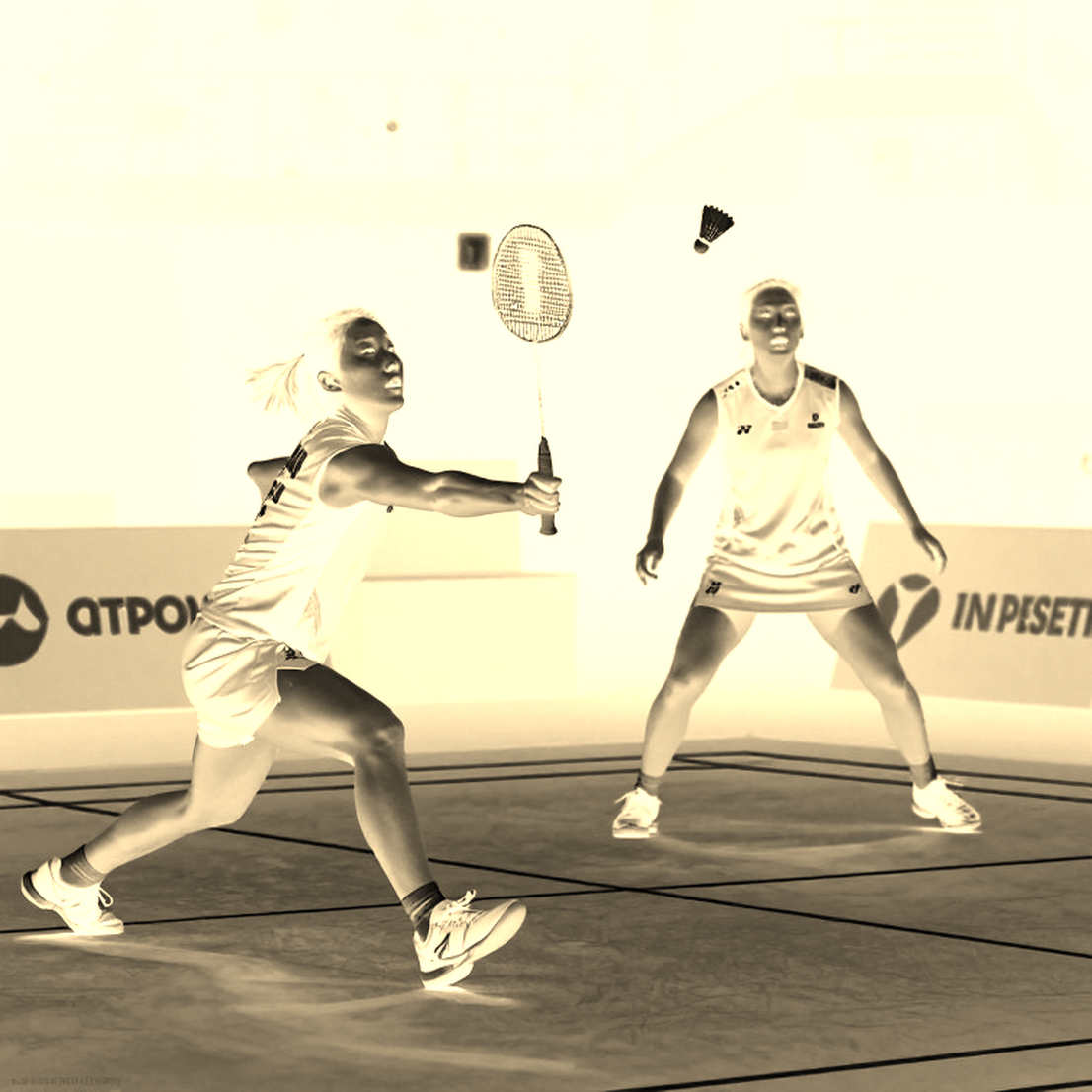
Now the part where I argue with my own constructed narrative. First: 'she took a game off the world No. 1' is a currency error — it treats a single game as an achievement. The actual currency is game-level competitiveness across a match, and there the ledger reads 1-2 with a 23-42 point deficit attached.
Second, and more importantly: this is not a form story, it is a style-matchup story. Form can be trained. A matchup needs a plan, and a plan needs the data this report does not carry. The report is also silent on the draw path — which seeded opponents Sindhu beat to reach the final is unknown. A final reached through an unseeded route carries less signal, and without it the weight of this result cannot be settled.
Third, on tier: this is a Super 750, not a Super 1000. The result is excellent, but treating it as world-title-grade proof would be over-reading. Fourth, on language: calling a 31-year-old's opening game against the world No. 1 a 'comeback' is data about our priors, not about the player. The gap between results and vocabulary remains the oldest gap in Indian badminton reporting.

Look ahead to the ranking arithmetic. A Super 750 runner-up finish is worth roughly 9,350 points on the standard BWF table; the Japan Open title about 11,000 — a seasonal haul in the region of 20,000. At 31, that haul is the most valuable asset Sindhu holds, because it buys top-8 seeding protection, and a top-8 seed means An Se Young cannot appear in her path before the quarter-finals at Super 750 and 1000 level. That is draw strategy, not title strategy.
The question is which one her team is building for next season — a plan to beat An Se Young, or a plan to avoid her. There is no public sample of the first. The second will protect a ranking, not win a title. And if neither plan is on the table, we will be explaining the same 23-42 scoreline at this time next year.