
होमAsian CricketThe New Picture of Shaheen and Babar at Lahore Nets: The Real Arithmetic of the Tri-Series
The New Picture of Shaheen and Babar at Lahore Nets: The Real Arithmetic of the Tri-Series
पाकिस्तान 25 अक्टूबर 2026 को लाहौर के गद्दाफी स्टेडियम में इंग्लैंड से खेलेगा। पाकिस्तान त्रिकोणीय ODI सीरीज़ में शीर्ष पर है; जीत से वह फाइनल में पहुंच जाएगा, जबकि इंग्लैंड की हार उसे लगभग बाहर कर देगी। शाहीन शाह अफ़रीदी कप्तान हैं। मुख्य तथ्य: - तीन लीग मैच बाकी: 25 अक्टूबर पाकिस्तान-इंग्लैंड, 27 अक्टूबर श्रीलंका-इंग्लैंड, 29 अक्टूबर पाकिस्तान-श्रीलंका; फाइनल 31 अक्टूबर। - इंग्लैंड के दो शुरुआती मैच हार, नेट रन रेट -0.892। - पाकिस्तान की 16 सदस्यीय टीम में शाहीन (क), बाबर आज़म, शादाब खान, नसीम शाह, हारिस रauf शामिल। - बल्लेबाज़ी कोच माइक स्मिथ ने बल्लेबाज़ों और ऑलराउंडरों के साथ विशेष सत्र किया। स्रोत: PCB मीडिया विज्ञप्ति, 25 अक्टूबर 2026 | क्रॉस-चेक: cricsultan.com संबंधित सवाल: - अगर पाकिस्तान 25 अक्टूबर को हार जाए? → उसके चार अंक रहेंगे और 29 अक्टूबर को श्रीलंका के खिलाफ क्वालिफिकेशन का मौका बचेगा। - इंग्लैंड कैसे क्वालिफाई कर सकता है? → उसे 25 और 27 अक्टूबर दोनों जीतने होंगे और नेट रन रेट पर निर्भर रहना होगा। - विकेटकीपर कौन होगा? → 16 सदस्यीय दल में मुहम्मद गाज़ी घोरी और साद बैग हैं; प्लेइंग इलेवन घोषित नहीं है।
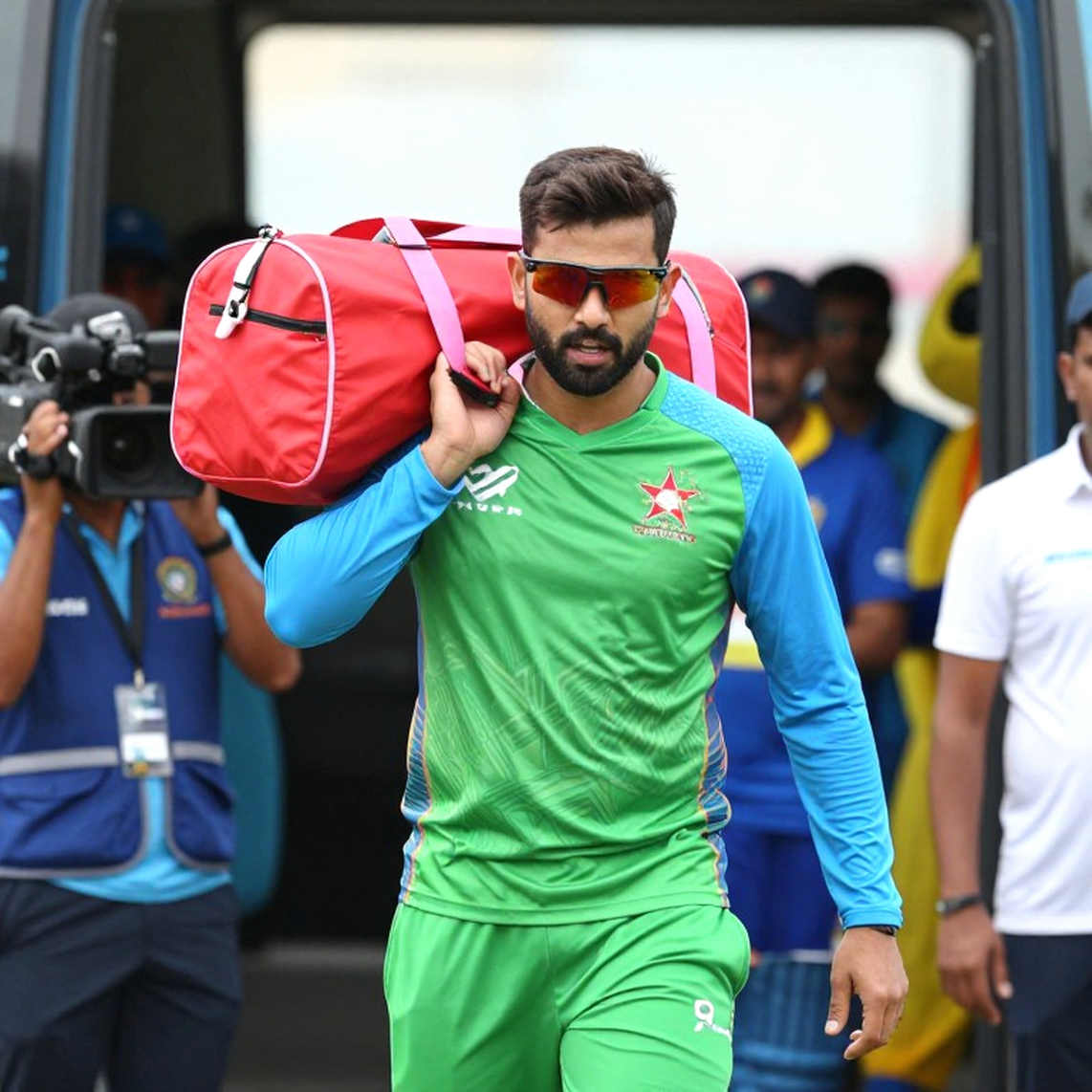
On the nets at Gaddafi Stadium there was something the points table does not show. Batting coach Mike Smith sat down Shadab Khan and spent the next forty-five minutes working only on footwork and shot selection against swing and seam. That was no coincidence. When a team sits top of the table, training turns to what has not been tested — a big chase, a second innings under dew, and acceleration against spin. Based on my years of watching matches, the focus of a session is often the most honest signal; here, that signal was batting.
Pakistan, England and Sri Lanka are playing a men's ODI tri-series in double round-robin format. Each side meets the other twice — six league matches in total. Three are complete; three remain. The points table has not been officially published, but the fixture arithmetic puts Pakistan on four points and top. England lost both of their opening matches and have a net run rate of -0.892. Sri Lanka are second. The remaining league games are all at Gaddafi Stadium, Lahore — Pakistan v England on 25 October, Sri Lanka v England on 27 October and Pakistan v Sri Lanka on 29 October. The final is on 31 October. A single-venue series makes pitch wear, net-run-rate decimals and dew more important than usual.
The real story is not in the training sets but in the squad list. Shaheen Shah Afridi is captain; Babar Azam is a squad member. That is a confirmed captaincy change. The last time these two names appeared together in an ODI, Babar was captain. Now Shaheen has both the new ball and the bowling-change decisions. Pakistan have Shaheen, Naseem Shah and Haris Rauf as the frontline quicks; Abrar Ahmed and Sufiyan Moqim as wrist-spin options; and Arafat Minhas as a left-arm spin all-rounder. Fakhar Zaman, Saim Ayub, Salman Ali Agha and Hasan Nawaz give batting depth. Faheem Ashraf and Razaullah add lower-order experience and squad flexibility. This does not look like an emergency selection; it looks like a balanced unit.
The biggest selection question is behind the stumps. Muhammad Ghazi Ghori and Saad Baig are both young and internationally inexperienced. In ODI cricket the keeper is not merely a gloveman; he stands up to spin, feeds DRS calls and sets the tempo of an innings. Baig was prominent at Under-19 level, Ghori has performed in the domestic season, but international ODI pressure is different. The absence of a senior keeper is either rotation or succession planning. Either way, it will be tested under pressure.
Mike Smith's long session with the batters and all-rounders points the same way. Shadab Khan received dedicated batting work. Shadab is already an all-rounder, but the session looked like preparation for a finishing role at six or seven. In modern ODIs, two new balls swing in the first ten overs and return late; the middle overs belong to spin, and the last ten belong to pace. That is why spinners like Shadab and Abrar can decide matches even when wickets go to Shaheen and Haris. Reading more than that from a training report would be wrong; ignoring it would be just as wrong.
I built the fixture spreadsheet myself — the spreadsheet did not lie. The original report contained a sentence: 'if England triumph, England would be on the verge of elimination.' That is backwards. The arithmetic says a defeat on 25 October practically removes England; a win keeps them alive on two points with a game in hand. A Pakistan win takes them to six points. Sri Lanka can reach only six; England can reach only two. In other words, Pakistan would be in the final. If Pakistan were to lose on 25 October, they still have four points and a chance against Sri Lanka on 29 October. But if Sri Lanka beat England on 27 October, Sri Lanka can move to six points, turning 29 October into a direct qualifier. That is why 25 October is almost do-or-die for England: a win keeps them alive, a defeat ends them. This correction is not minor — it changes the direction of the remaining series.
The 'England in crisis' headline is easy to write, but the evidence is thin. Two defeats is a small sample. We do not know whether the losses were by eight runs or eighty, who won the toss, or whether DLS intervened. Diagnosing a crisis without those details is like handing out a punishment without reading the charge sheet. England are the 2026 World Cup champions, but a six-year-old title says nothing about 2026 form. Half of that side has changed. Babar Azam is in the squad but not the captain. Such changes often reflect management strategy or a player's own preference; here no explanation is given. I will treat it as an unanswered question rather than a story. If Babar opens or bats at three, his role is clear; if he moves down the order, that is a different signal.
On the other side, Pakistan carry a hidden risk. Shaheen is both captain and the main new-ball bowler. When a team is winning, that double role looks easy; when a match is on the line, a captain-bowler can overbowl himself. This pattern has been seen repeatedly in international cricket. It is not an accusation; it is a warning. There is also a venue layer. All matches are at one ground. Gaddafi Stadium is historically a batter-friendly, high-scoring surface. In late October, dew can strip the spinners' grip and reduce bowling control in the second innings. Lahore's winter air quality is also a documented concern. The report includes no pitch report and no weather data, so any prediction is only an inference.
The report carries no byline and no agency attribution. That does not mean the facts are wrong; the squad and fixtures match official PCB documentation. But the word 'Friday' appears without a date, and the points table is not printed. This is where the habit of reading the clauses helps: what is not clear in the document cannot be told confidently in a story.
Now the remaining series has only two questions. First, can England survive the 25 October match and stay mathematically alive until 27 October? Second, will Pakistan's new captaincy structure and young keepers hold up in a pressure match? The final on 31 October will answer those questions. For me, the most interesting point is that the real winner of this tri-series may be the side that clarifies its roles before lifting the trophy.


संबंधित खिलाड़ी
लोकप्रिय/पसंदीदा पुस्तकें
The Empty File: Where the Evidence Went in Asian Cricket's News Cycle2026-10-26
Asia Cup 2026 and the Unseen Architecture of Asian Cricket: The Real Game from Neutral Venues to Academies2026-10-26
Five Ducks, 113 All Out: India A's Scorecard Is Delivering a Verdict It Cannot Support2026-10-25
Tilak's 26 catches, Arshdeep's 38 wickets — and one empty box on the scoresheet2026-10-25
The Label Survived, the Story Didn't: One Empty Field in Cricket's Information Chain2026-10-25
Ishan Kishan's Injury, a 15-Year-Old's Door, and Mayank Yadav's Silence: A Three-Line Audit of India's Team Sheet2026-10-25
Tilak Varma's Risk-Managed Masterclass in Christchurch: The Two-Phase Graph Behind 46 Off 182026-10-25
अनुशंसित
Not a Broken Promise but a Broken Queue: Who Really Closed Amit Mishra's India Career on That February 2026 Evening2026-10-25
The Call That Never Came: Reading Amit Mishra's Claim on the Map of India's Selection System2026-10-24
The New Picture of Shaheen and Babar at Lahore Nets: The Real Arithmetic of the Tri-Series2026-10-25
Five Ducks, 113 All Out: India A's Scorecard Is Delivering a Verdict It Cannot Support2026-10-25
Empty Record, Valid Tag: The Cricket Data Pipeline Failure That Invites Fabrication2026-10-25
"Four? Which Ones?" — Glenn Phillips's Question, the Anatomy of a Dropped Catch, and the Real Arithmetic Behind New Zealand's Fielding Debate2026-10-24
From the Mirpur Corridor: Ashraful's Exit Is Not a Sacking, It's the BCB's Quiet Role Change2026-10-26
अनुशंसित
"Four? Which Ones?" — Glenn Phillips's Question, the Anatomy of a Dropped Catch, and the Real Arithmetic Behind New Zealand's Fielding Debate2026-10-24
Litton Das's Selection and an Unfinished Ledger: The Real Risk in Bangladesh's Two-Test Gamble2026-10-24
The Call That Never Came: Reading Amit Mishra's Claim on the Map of India's Selection System2026-10-24
The Label Survived, the Story Didn't: One Empty Field in Cricket's Information Chain2026-10-25
IND vs NZ: Shreyas Iyer 25 Runs From Rohit Sharma's T20I Captaincy Record — A Data Audit Before the Match2026-10-25
Empty Record, Valid Tag: The Cricket Data Pipeline Failure That Invites Fabrication2026-10-25
NCL Round 4, Day 1: What Naeem's 171* and Mahfizul's Century Really Mean on 76-Runs-Per-Wicket Pitches2026-10-25
अनुशंसित
IND vs NZ: Shreyas Iyer 25 Runs From Rohit Sharma's T20I Captaincy Record — A Data Audit Before the Match2026-10-25
Ishan Kishan's Injury, a 15-Year-Old's Door, and Mayank Yadav's Silence: A Three-Line Audit of India's Team Sheet2026-10-25
Tilak Varma's Risk-Managed Masterclass in Christchurch: The Two-Phase Graph Behind 46 Off 182026-10-25
Empty Record, Valid Tag: The Cricket Data Pipeline Failure That Invites Fabrication2026-10-25
The Empty File: Where the Evidence Went in Asian Cricket's News Cycle2026-10-26
NCL Round 4, Day 1: What Naeem's 171* and Mahfizul's Century Really Mean on 76-Runs-Per-Wicket Pitches2026-10-25
Tilak's 26 catches, Arshdeep's 38 wickets — and one empty box on the scoresheet2026-10-25