
The 89-run last stand in Lahore: Shadab Khan's hundred and England's final-ten-over failure
**मूल उत्तर**: पाकिस्तान ने लाहौर के गद्दाफ़ी स्टेडियम में त्रिकोणीय सीरीज़ का ग्रुप मैच एक विकेट से जीता, जब शादाब खान (113* off 96) और हारिस रauf (7* off 19) ने दसवें विकेट के लिए नाबाद 89 रन जोड़कर 243 का लक्ष्य 17 गेंद शेष रहते हासिल किया। **मुख्य तथ्य**: - इंग्लैंड 47.4 ओवर में 242 पर ढेर; बेन डकेट का 111 गेंदों पर 105 रन (स्ट्राइक रेट 94.6) उनका पाँचवाँ ODI शतक। - पाकिस्तान 34वें ओवर में 154/9 था; आख़िरी जोड़ी ने 79 गेंदों में 89 रन बनाए। - शादाब के 113 रन में से 82 (72.6%) चौकों-छक्कों से आए — तेरह चौके, पाँच छक्के। - शाहीन शाह अफ़रीदी ने 8.4 ओवर में 4-46 लिए और ODI में 150 विकेट पूरे किए। - दोनों पारियों में शीर्ष क्रम सात ओवर के भीतर तीन विकेट गँवा बैठा: इंग्लैंड 19/3, पाकिस्तान 31/3। **स्रोत**: The Express Tribune की मैच रिपोर्ट (फ़ोटो श्रेय: Reuters); स्कोरकार्ड-स्तरीय आँकड़ों की पुष्टि ESPNcricinfo/Cricbuzz से की जानी चाहिए। **संबंधित प्रश्नोत्तर**: प्रश्न: क्या यह पाकिस्तान की बल्लेबाज़ी-गहराई का सबूत है? उत्तर: नहीं — पीछे के अधिकांश हिस्से में पाकिस्तान पिछड़ रहा था; 89 रन की दसवें विकेट साझेदारी कम-संभावना वाली घटना है, दोहराने योग्य रणनीति नहीं। प्रश्न: इंग्लैंड कहाँ हारा? उत्तर: पावरप्ले में नहीं, बल्कि दोनों पारियों के मध्य-से-अंतिम ओवरों में — 145/4 से 242 तक सिमटना और नौ विकेट पर 89 रन देना। प्रश्न: इस मैच का सबसे अहम युवा संकेत क्या था? उत्तर: आराफ़ात मिन्हास का 2-26 और सआद बैग का 22 गेंदों पर 32 रन, जिन्होंने 31/3 से पीछा करने लायक़ आधार बनाया।
I stopped the stream after the last ball of the 34th over and rewound it four times. The scoreboard read 154/9. Shadab Khan was on strike, Haris Rauf at the other end — 19 balls for seven runs, meaning his job there was survival, not scoring. Pakistan needed 89 from 96 balls. Seventy-nine balls later Shadab was unbeaten on 113, Haris on 7, and Pakistan had won by one wicket with 17 balls to spare. The thing that made me pause the stream was not the win. It was that 34th over, the point at which the contest should, on principle, have been finished.
Gaddafi Stadium, Lahore, Sunday. A tri-nation series group match, 50-over format, no ICC global event attached. Pakistan won the toss and fielded. This is the match in which Razaullah debuted after Naseem Shah's injury, Haris Rauf returned to the XI, and Shadab Khan was recalled in place of Faheem Ashraf — meaning he was outside the first-choice XI, which is itself a form signal.
England were 19/3 inside five overs: Banton 4, Root 5, Brook run out 1. Pakistan's powerplay was 31/3 in seven overs: Fakhar 10, Saim 6, Babar 10. Both top orders lost three wickets inside seven overs. ODIs use two new balls, so both ends carry shine — Pakistan exploited it, England's top three did not survive it. That reads less like a one-sided technical collapse and more like a surface and new ball working together.
What the report does not say matters as much as what it does. Pitch type is not recorded. Grass cover is not recorded. Whether it was a day match or a day-night game is not stated either. Without knowing how much dew fell on a Lahore evening, the ease of that final partnership cannot be fully accounted for. The available signals suggest this was not a 320-par belter: England were bowled out for 242, Pakistan finished 243/9, and two spinners, Dawson and Arafat Minhas (2-26), shared four wickets between them. There was grip or turn, or at the very least no express pace.
Ben Duckett made 105 off 111 (strike rate 94.6), ten fours, two sixes, his fifth ODI hundred — 43 per cent of England's runs. He and Sam Curran put on 126 for the fifth wicket. From there England went from 145/4 to 242 all out: 97 runs for six wickets, with 20 balls unused. Curran's 42 off 52 (strike rate 80.8) is sub-par for a No.5 or 6 in a 50-over innings. The rebuild happened; it was never converted into acceleration.
Now the innings I stayed up for. Sitting between a buffering video and a hunch is an old habit of mine. Shadab's 113* came off 96 balls at 117.7. Thirteen fours and five sixes — 82 of 113 runs, 72.6 per cent, from boundaries alone. That is a boundary-or-block method, not rotation-based accumulation. The ODI benchmark for a No.7 or 8 is a strike rate of 85-95 and an average in the low twenties. A No.8 hundred is a rare event in itself, and this innings sits far above his own distribution; the report does not provide a career baseline, so an exact deviation cannot be computed, but it is an outlier beyond doubt.
The situation flattered the number further. A tailender at the other end, no fielding restrictions, an old ball, and an opposition in defensive mode. There is no more favourable context imaginable for a lower-order hitter. Haris Rauf's seven off 19 balls means roughly 92 per cent of that 89-run stand came from Shadab alone. Haris's contribution was not runs but occupation, and that occupation sits outside his normal batting range. That is the real signature of the partnership: one man making 92 per cent of the runs while the other took no risk at all across ten balls.
England's final-ten-over cricket is the single biggest tactical failure of this match, and it appeared in both innings. With the ball: once nine wickets had fallen the field spread, catchers came out, and scoreboard pressure dissolved — protecting the boundary looks rational on paper, but against a batter striking at 113 it amounted to giving away free runs. With the bat: a set centurion was at the crease around the 30-over mark with the score at 145/4, and from there 290-plus is the ordinary expectation. England made 242.
The best bowling performance of the match was not Shadab's but Shaheen Shah Afridi's — 4-46 from 8.4 overs at an economy of 5.31, and his 150th ODI wicket. That number got buried beneath the headline. Shaheen was captaining a rotated attack containing a debutant and a returning fast bowler, and that attack bowled England out inside 48 overs. A curious detail about Shadab's own profile sits here too: he was picked as the spin-bowling all-rounder, and his bowling figures appear nowhere in the report. The match was won with his secondary skill, not his primary one.
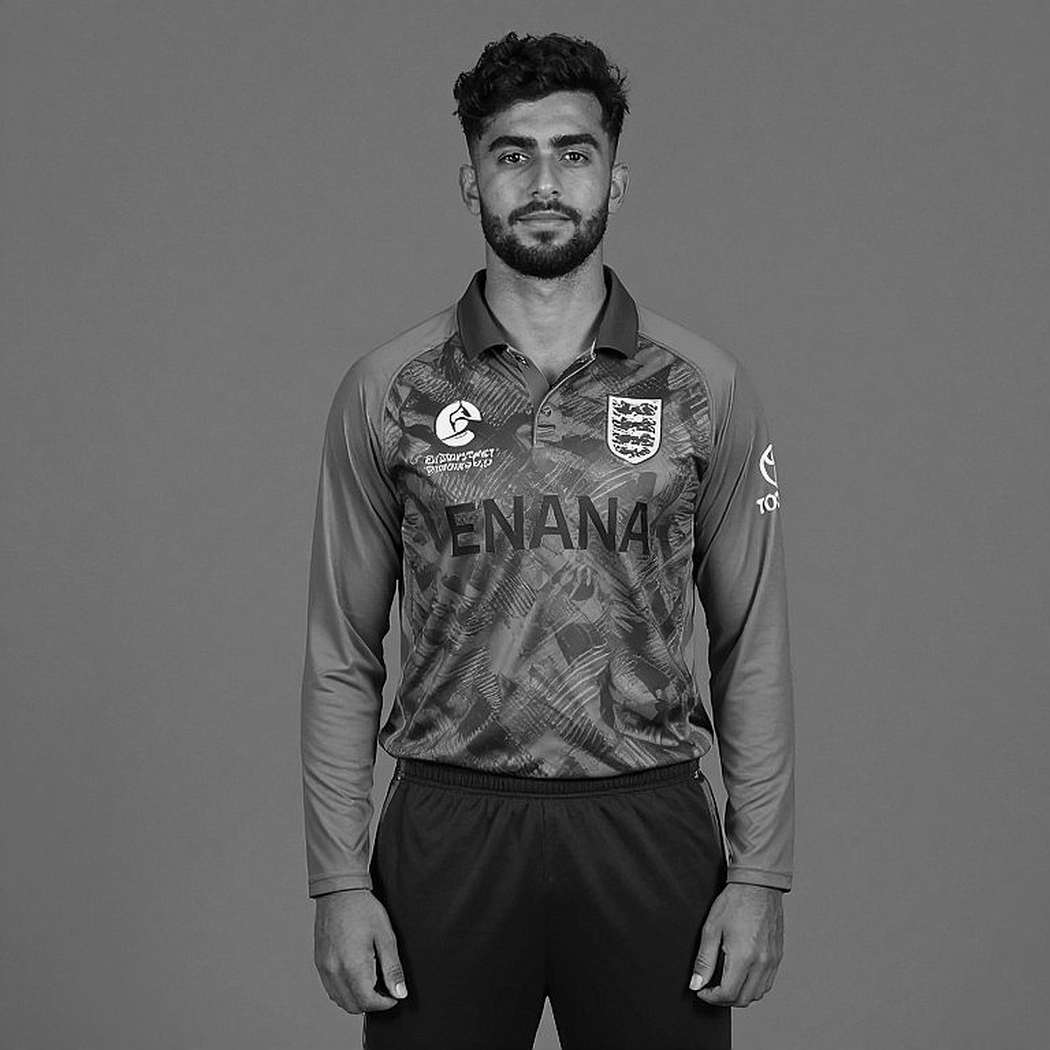
Under-19 tournaments are not merely tournaments; they are excavation sites — and the real find of this Lahore night was not the hundred but two young names. Arafat Minhas's 2-26: left-arm spin, exactly the category this surface rewarded, and he took two of the four spin wickets. Saad Baig's 32 off 22: the innings that carried 31/3 to 103/6, making the chase viable at all. The chase progressed 31/3, 103/6, 122/7, 131/8, 154/9, and finally 243/9. In my years of taking notes off domestic and tri-series streams, the genuine signal in matches like this always turns up where the camera does not go.
Now the part that will not make the headlines. A one-wicket margin is a misleading summary of this contest. For roughly 75 per cent of the chase, Pakistan were the clearly inferior batting side. The result was produced by one extraordinary individual innings and an English late-phase breakdown, not by a superior team performance. Reading it as evidence of Pakistan's batting depth would be a category error. No repeatable process produces an 89-run tenth-wicket stand; that is a low-probability event, not a tactic.
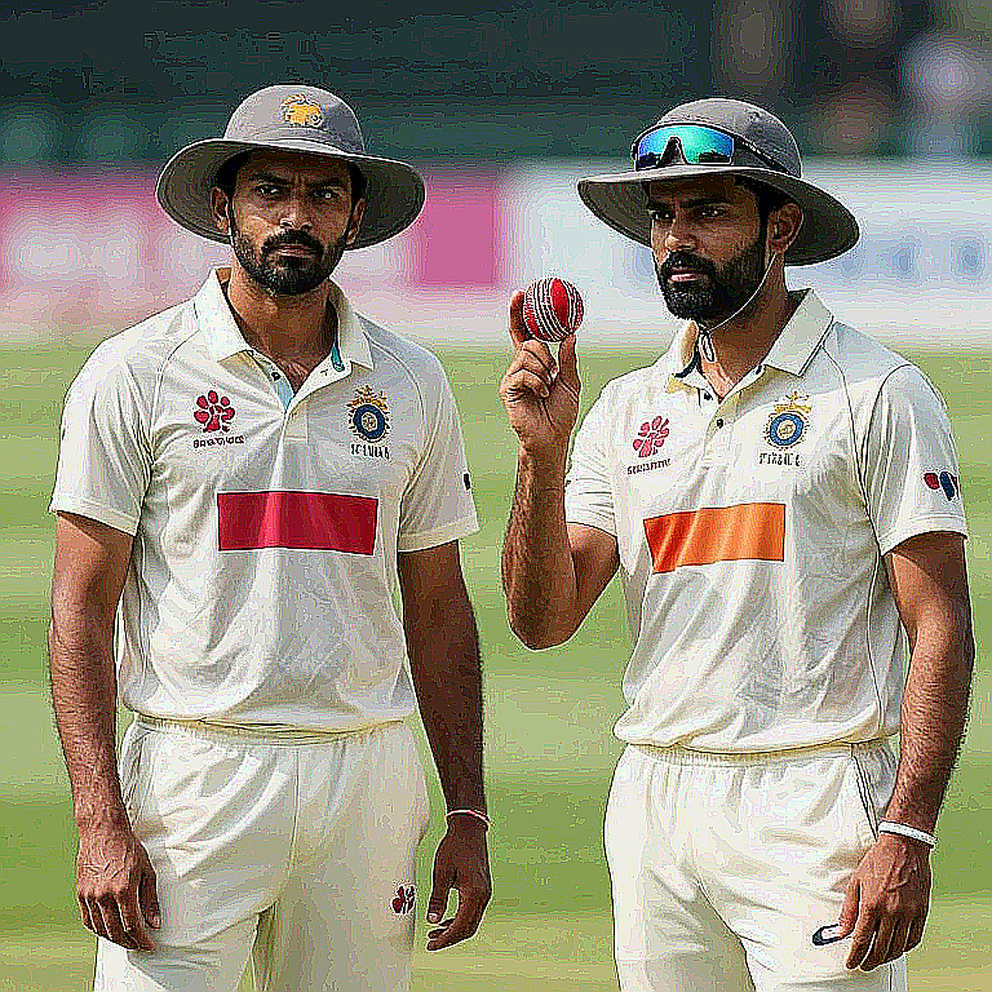
And there is a further layer on top. According to the report, presidential and prime-ministerial statements have attached themselves to this result, moving it off the sports page and into state narrative. When a low-probability performance becomes state narrative, the risk to the reader is plain: numbers and meaning begin to dissolve into one another. Shadab's innings was extraordinary — turning it into proof of a national trend would be a rush to judgement.
What to watch next? For Pakistan the real question is the top order; 31/3 inside seven overs will not survive repetition. For England it is the final-ten-over plan, in both innings. Whether Arafat Minhas gets a proper run or is rested next match is the most interesting selection question of this tri-series. And one warning on Shadab: reading 113* as 'the finisher role' is the same error as treating a high auction bid as a scouting verdict. Will the side that won from 154/9 take that risk again — or will selectors, chasing a repeat of the outlier, overlook the crack at the top of the order?