
Fakhar's Blitz and Youth Fifties Hand Pakistan the Tri-Series Title as Naqvi Hails the Team
पाकिस्तान ने लाहौर के गद्दाफ़ी स्टेडियम में खेले गए एकदिवसीय तिरंगी सीरीज़ के फ़ाइनल में श्रीलंका को हराकर ख़िताब जीता। मेज़बान टीम ने 326 रन का लक्ष्य नौ गेंद शेष रहते हासिल किया। फखर ज़मान ने 99 गेंदों पर 127 रन बनाए, जिसमें 11 चौके और छह छक्के शामिल थे (स्ट्राइक रेट लगभग 128)। साद बैग ने 74 और आराफ़त मिन्हास ने 61 रन की पारी खेली; तीनों ने मिलकर 262 रन जोड़े। पीसीबी अध्यक्ष मोहसिन नकवी ने बोर्ड की ओर से जारी बयान में टीम और विशेष रूप से इन तीनों की तारीफ़ की और निरंतरता पर ज़ोर दिया। ध्यान रहे कि जीत का अंतर (सात विकेट) और अन्य मैच-तथ्य अभी स्वतंत्र स्कोरकार्ड से सत्यापित नहीं हैं, और रिपोर्ट में गेंदबाज़ी, तीसरी टीम तथा टॉस/परिस्थितियों का कोई विवरण नहीं है।
Pakistan clinched the ODI tri-series title by beating Sri Lanka in the final at Lahore's Gaddafi Stadium. The hosts chased down 326 with nine balls to spare — meaning that by the time they reached the target, the pressure was not from the overs but from time saved. Chasing 326 on a batting-friendly Lahore surface is above par but far from impossible; completing it while maintaining tempo through the death overs is the real takeaway of this match. Pakistani reports state the win came by seven wickets, though that figure still needs independent scorecard verification.
Fakhar Zaman: 127 off 99 balls
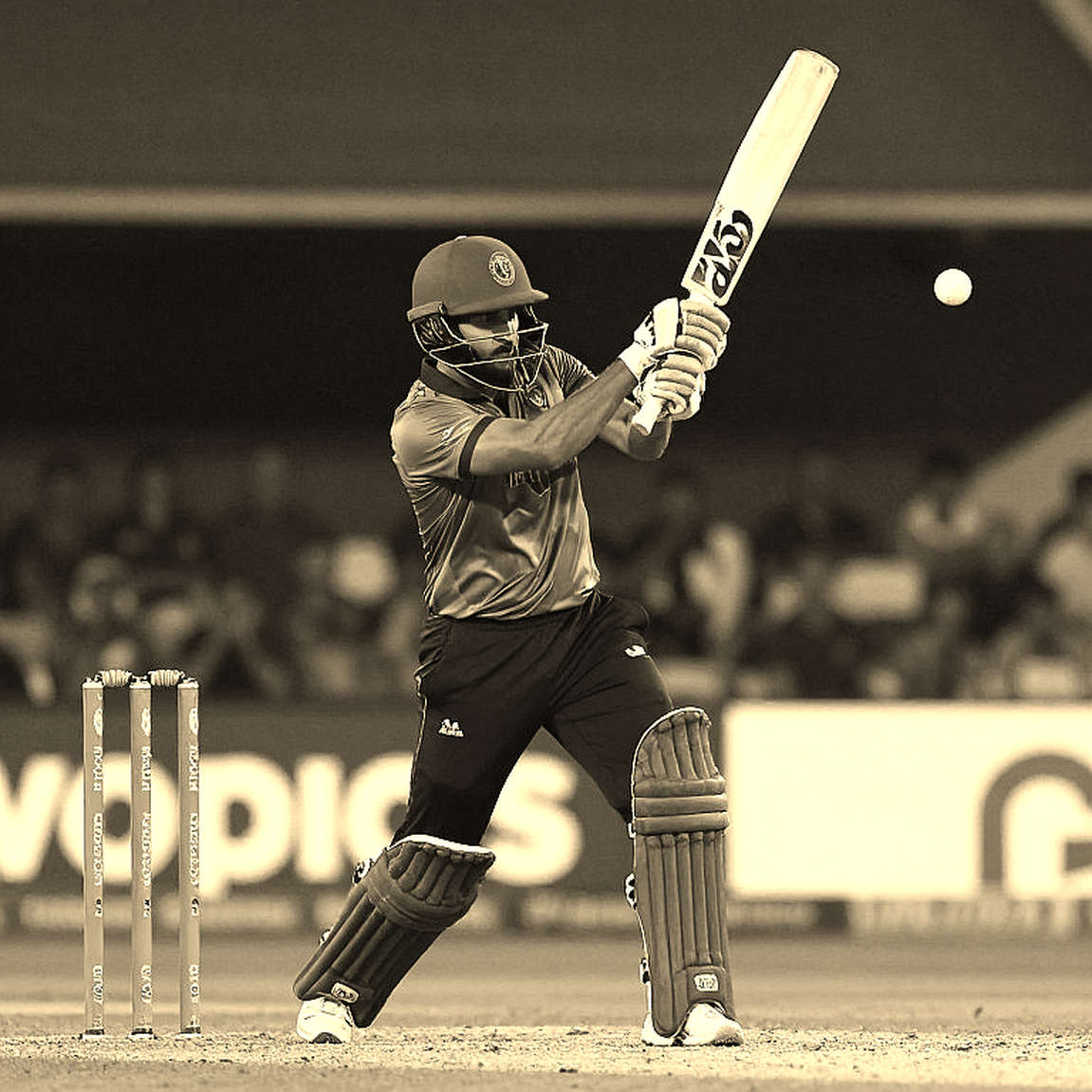
The centrepiece of the match was left-handed opener Fakhar Zaman, who struck 127 off 99 deliveries. The innings included 11 fours and six sixes — 80 runs in boundaries alone. Roughly 63 per cent of his total came in fours and sixes, a strike profile that points to genuine dominance rather than slow accumulation.
His strike rate works out to approximately 128.3. In modern ODI cricket, a strike rate of 95 to 105 is considered elite for a top-order batter; 128 while chasing 326 is exceptional because risk and control moved together. This is the most analytically significant data point in the report.
Support from Saad Baig and Arafat Minhas
Fakhar did not do it alone. Wicketkeeper-batter Saad Baig made 74, while all-rounder Arafat Minhas added 61. Together the trio contributed 262 runs — the bulk of the target. The remaining roughly 64 runs came from the rest of the order, which either means the team did not need more from them, or that there was a middle-order wobble. The available information does not allow the two possibilities to be separated.
If the win really was by seven wickets, it means only three wickets fell — a comfortable, controlled chase. But if the report actually says seven wickets were lost, the picture changes entirely and it becomes a tense, stuttering chase. The gap is large enough that no conclusion should be drawn without resolving it against the scorecard.
The home-ground arithmetic
Gaddafi Stadium has traditionally favoured batters — true bounce, a quick outfield and conditions that help the chasing side. Given that, a home team chasing 326 is a result that is slightly better than expected, not a miracle. In cricket, the home-away split is the biggest structural divide, and Asian teams are markedly stronger at home. Reading this win as a revival of Pakistani ODI cricket would therefore be premature.
It is also worth noting that the report contains no bowling or fielding detail. Any claim about a team's overall performance requires bowling data, and that is entirely absent here. Drawing conclusions from what is not stated is a dangerous exercise.
Mohsin Naqvi's statement
PCB Chairman Mohsin Naqvi congratulated the team after the win and specifically praised Fakhar Zaman, Saad Baig and Arafat Minhas. In a statement issued by the board, he commended the aggressive batting and said success comes from playing with passion, dedication and determination. The statement also emphasised consistency.
This should be read as institutional communication rather than a match report. A statement released through PCB channels is a primary source, but a self-interested one — a source crafted to claim institutional credit. There is no rule breach or controversy in it, but it should not be read as neutral news.
Interestingly, by stressing consistency, Naqvi implicitly acknowledged the old weakness that has defined Pakistani cricket — talent without result stability. That is a rare, self-aware admission buried inside ceremonial phrasing.
Youth: speculation or investment?
Fifties from Saad Baig and Arafat Minhas in a senior ODI final suggest Pakistan fielded a partly rotated or transitional XI. Both are emerging players, and one innings in one final is not proof that they have become stars. In South Asian cricket, the historical conversion rate from one good knock to sustained international output is low.
On the other hand, a board chairman publicly naming three players rather than the whole squad can function as a selection signal. It can create pressure on selectors or generate expectation burden. The risk looks small but is politically sensitive.
The governance angle
Mohsin Naqvi simultaneously holds a sitting government ministerial role. That is a structural pattern of government-linked board leadership, which can attract scrutiny under the ICC principle that is sensitive to direct government interference in board governance. There is no concrete violation in this article and no mention of any playing-rule controversy — no DRS, no DLS, no over-rate issue. The risk here is therefore purely about optics and institutional perception, not rules.
What is not known
This was a tri-series, meaning at least one third national team took part — yet the report does not mention it. That makes it impossible to assess how difficult Pakistan's path to the final was and what level of opposition it faced earlier. Similarly, there is no mention of the toss, dew, DLS or a fresh pitch report, so luck factors cannot be ruled out.
The biggest information asymmetry is that most match facts are not attributed to a clear source, while the heaviest content — the quotes — comes from the PCB's own statement. This needs to be cross-checked against independent scorecard sources such as ESPNcricinfo.
Ranking and competitive context
Sri Lanka is a peer mid-tier side. Beating a peer at home is consistent with Pakistan's expected home edge and does not by itself reorder the Asian ODI hierarchy. Its surprise value is low, so its signal value for ranking conclusions is also low. The real strategic signal lies in youth investment — giving Saad Baig and Arafat Minhas a senior opportunity indicates the direction of selection policy.
Risk: over-reading one match
The biggest risk is analytical rather than institutional — treating one home final as proof of a Pakistani ODI revival. Whether Fakhar's form is a spike or a trend will be decided by the next three to five innings. Expectations around Baig and Minhas are similarly being built on one innings each. Home results can mask weaknesses abroad, so away and neutral-venue data should be weighed separately.
Commercial impact
This is an international home ODI series, not a T20 league or franchise auction. Its commercial transmission is therefore thin: a home title generates mostly sentiment and PR value, not structural market movement. A short-term engagement lift in the Pakistani broadcast market is plausible, but the report carries no viewership or rights data, so that remains inference, not fact. The clearest transmission channel is youth-scouting optics — highlighting two young players in a final reinforces the narrative of Pakistan's domestic talent pipeline.
Conclusion
The real analytical value of this match is moderate and mostly confined to a single game. It provides solid evidence of Fakhar Zaman's aggressive top-order capability and indicates a possible direction of youth investment. But it is a home-venue, single-sample, one-sided information set that should not be treated as proof of a Pakistani ODI revival. The correct use is to log it as raw performance data and wait for confirmation in upcoming series.