
Windhoek's 1,700 Metres and a 09:30 Start: Jordan Neill's Real Test Is the Clock, Not the Pitch
**मुख्य उत्तर**: जॉर्डन नील 21 वर्षीय आयरिश सीम-गेंदबाज़ी ऑलराउंडर हैं जो नामीबिया में पाँच मैचों की वनडे सीरीज़ से लौट रहे हैं। उनका प्रदर्शन-आँकड़ा उपलब्ध नहीं है, इसलिए मूल्यांकन भूमिका और चोट-इतिहास पर आधारित है, आँकड़ों पर नहीं। **मुख्य तथ्य**: - सीरीज़: आयरलैंड का नामीबिया दौरा, विंडहोक में पाँच वनडे, पहला मैच 09:30 स्थानीय समय पर - विंडहोक लगभग 1,700 मीटर ऊँचाई पर है; पतली हवा से स्विंग कम, कैरी अधिक - नील की उम्र 21 वर्ष, डेब्यू 19 पर; पिछले लगभग दो वर्षों में कई चोटें - नए मुख्य कोच गैरी विल्सन के अधीन यह पहला लंबा वनडे ब्लॉक है - बल्लेबाज़ी/गेंदबाज़ी औसत, स्ट्राइक रेट और इकॉनमी — सभी अनुपलब्ध **स्रोत**: जॉर्डन नील का मीडिया इंटरव्यू, नामीबिया वनडे दौरे से पूर्व | Cross-checked: cricsultan.com **संबंधित प्रश्न**: प्रश्न: नील की वापसी का सबसे बड़ा जोखिम क्या है? उत्तर: चोट का दोहराव — 21 वर्ष की उम्र में दोहरे शारीरिक भार वाली भूमिका में लोड-प्रबंधन निर्णायक कारक है। प्रश्न: विंडहोक की परिस्थिति किसके अनुकूल है? उत्तर: ऊँचाई और सुबह का स्टार्ट नई गेंद पर सीम गेंदबाज़ी को सहायता देता है, स्पिन और डेथ-ओवर गेंदबाज़ी को नहीं। प्रश्न: इस सीरीज़ का आयरलैंड के लिए ढाँचागत महत्व क्या है? उत्तर: शीर्ष आठ से बाहर रहते हुए 2027 विश्व कप चक्र के रैंकिंग अंकों का वज़न बढ़ जाता है, हालाँकि अंकों की पुष्टि अभी बाक़ी है।
The first ball in Windhoek will be bowled at 09:30 local time on Thursday, which is 08:30 British Summer Time. It is the opening fixture of Ireland's five-match ODI tour, and that start time looks less like a cricket decision than a broadcast one — convenient for Irish and European audiences, not obviously for the players. It will still shape what happens on the field.
In a day-night 50-over match, dew makes the ball skid, kills the spinner's grip and forces captains to rewrite their second-innings plans. A morning start has no dew. Windhoek sits roughly 1,700 metres above sea level, where the air is thin — the ball carries straighter for longer and swings less. New-ball pace and bounce should work. Turn should not.
That entire paragraph is about Jordan Neill, even though his name has not appeared yet. A 21-year-old seam-bowling all-rounder returning from a year largely lost to injury carries his greatest value and his greatest risk in the same sentence: his overs matter most in the first spell, and may not exist at all between overs 41 and 50. The headlines are about the comeback. The real question is which hour of the match that comeback gets assigned to.
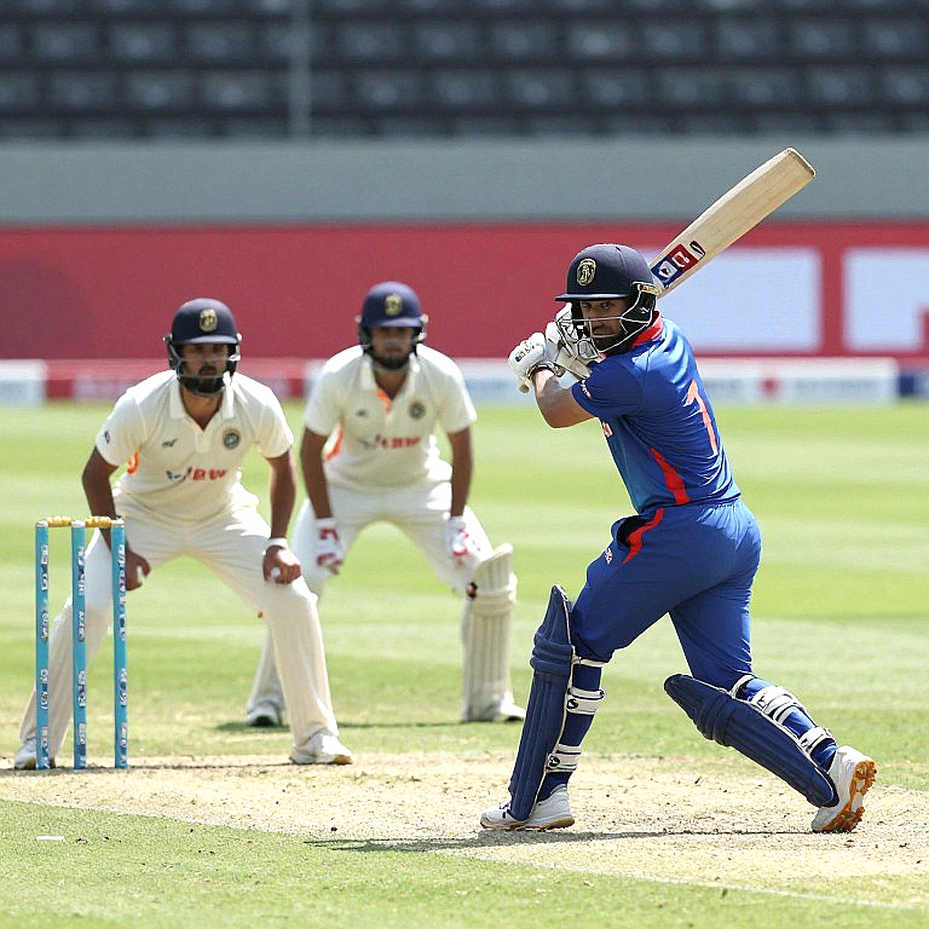
The shape of the series, and the information that is missing
Ireland play five ODIs, all in Windhoek. It is new head coach Gary Wilson's first extended 50-over block in charge. Five matches is the longest bilateral unit the format offers outside a World Cup — a usable but still small sample for rotation and role assessment.
An ODI is decided in three blocks: Powerplay 1 (overs 1–10, two new balls, two outfielders outside the circle), the middle overs (11–40, spin control and strike rotation) and the death overs (41–50, acceleration). Combine 1,700 metres with a 09:30 start and a reasonable inference forms: the first ten overs will be seam-friendly, and batting will get easier afterwards. That inference carries medium confidence. The altitude is settled geography; the specific surface is unverified.
What matters just as much is what this source does not contain. No Namibia squad, no players, no recent form, no head-to-head. No confirmation that these matches carry ICC ODI ranking points. No confirmation that full DRS is operating — Associate-hosted bilaterals sometimes run without it. Where the information is absent, I will not fill the gap with speculation. Three items stay explicitly open, and they return at the end of this piece.
There is also an arithmetic anomaly in the source. It states that Neill debuted at 19 in 2026 and is now 21. Those two figures imply a current year of roughly 2027, which sits awkwardly beside the same article's reference to "the New Zealand Test at the beginning of the summer." Ireland's Test in Bangladesh was in April 2026 — that is my own knowledge, not part of the source. If it is right, the 2026 figure was mis-extracted. I am marking it, not correcting it.
Jordan Neill: what can be measured, and what cannot
Here I have to repeat my least popular habit. Before writing about any 21-year-old, I build the columns and fill them in order. For Neill, the table reads:
Batting average — unavailable. Batting strike rate — unavailable. Bowling average — unavailable. Bowling economy — unavailable. Home/away splits — unavailable. Splits versus pace and versus spin — unavailable.
Seven empty columns. This is not a lazy opening device; it is the most honest finding in the entire analysis. On this evidence I cannot make a single numerical claim about Neill's quality. What I can do is analyse role and risk.
The role matters more than the numbers. "Bowling all-rounder" in ODI cricket implies a specific scarcity: a player good enough to hold a top-seven batting slot and deliver a full ten-over allocation. That combination is what allows a captain to field an extra specialist bowler or an extra batter. If Neill genuinely fills it, his structural value to Ireland will always sit above his raw figures. High confidence in the principle; low confidence that he currently meets it.
The strongest technical signal available is a negative one. Neill himself describes Bangladesh as "probably one of the hardest places to go as a fast bowler" — heat, humidity, slow low surfaces, reverse swing with a scuffed ball. Those are conditions that work against his method. Windhoek's altitude and bounce sit closer to his comfort zone than Mirpur. Whether that is genuine technical fit or a young player's rationalisation will be settled only by the series.
Then the fact that dominates everything: the injury record. Multiple injuries inside roughly two years. Another one immediately before a home Test against New Zealand. "The bulk of this year" lost. At 21, in a role with a doubled physical workload, that is not a bad-luck anecdote. It is a load-management pattern.
My own notebook started as a rehab log. After a stress fracture of the L4 vertebra in 2026 I spent that winter in a brace in Ahmedabad, hand-charting all ten of Gujarat's Ranji Trophy matches. That exercise taught me something no scorecard carries: the first sign of an injury does not appear in the bowling figures, it appears in spell length. A spell that suddenly shortens after the seventh over has a cause that is not the weather.
Which is why, on this tour, I will watch one thing more closely than anything else — the length of Neill's spells, not his wicket column. If he shifts from six overs to four, the scorecard will look fine and the message will be wrong.
Format contamination: the oldest error in the trade
Neill's reference points are Tests — the Bangladesh tour, the home Test against New Zealand. The assignment is a 50-over series at 1,700 metres. Test new-ball demands (longer spells, fuller lengths, endurance) and ODI demands (four-to-ten-over bursts, death variations) are not transferable metrics. "He's back, therefore he'll perform" welds two different sports into one sentence. That error is present in the original source, and it is the most common one in circulation.
There is a second layer to it. A fast bowler's failure in Bangladesh is routinely read as a technical deficiency, when the actual driver is the absence of reverse swing with an old ball and consistently low bounce. Windhoek has neither. If Neill bowls well there, it will not mean he has solved a technical problem. It will mean the conditions changed. The gap between those two sentences is the gap between analysis and publicity.
Ireland's real opponent is not Namibia
Ireland sit outside the ICC ODI top eight, broadly in the 9–12 band. That is an approximate position, not a verified one, and it is flagged. The structural fact stands regardless: outside the automatic top-eight zone, ranking points from every bilateral ODI carry disproportionate weight in the 2027 World Cup cycle. A 5–0 and a 3–2 are not merely different flavours of series win; they are different qualification arithmetic. This is the highest-value verification item in the whole dataset, and the source leaves it blank.
Ireland's competitive identity is built on seam-friendly home conditions — cloud, green-tinged surfaces at Dublin and Malahide. Away in heat, altitude and low bounce they have been less convincing. Namibia's dry season is neither an Irish nor a subcontinental assignment. It is a third category for which Ireland has no benchmark.
The player pool is small. That is not a statistical opinion, it is a structural ceiling. Losing one frontline seamer disrupts the entire attack and the backfill options are limited — Neill's lost year is the proof. A new coach, a returning 21-year-old, and a five-match block against an Associate is a rebuild fixture, not a results-first assignment. The team sheet will be the most honest document of that.
Contrarian angle: returning from injury does not make a player better
"It makes you a bit hungrier to come back harder" and "everything happens for a reason" are the standard, well-rehearsed lines of every comeback interview, and they are routinely treated as performance forecasts. In sport, adversity-to-improvement is among the least reliable causal claims available. Players who return sharper usually return sharper because their workload, action or strength-and-conditioning base changed — not their mood. The relevant question is therefore not about Neill's attitude. It is about Cricket Ireland's medical and S&C decisions. The source provides no diagnostic detail, so all three plausible causes remain open: an acute workload spike, biomechanical inefficiency, or an inadequate strength base. I will not call what I cannot see a strength.
Second contrarian point: Neill may not be a death bowler at all. Altitude plus a morning start point to a plan where his value is front-loaded — four to six overs, new ball, two fielders out. Across a five-match series, his overs will likely be capped deliberately, and given the injury history they should be. If so, he will not get death-over exposure on this tour at all, which means his real maturation test gets deferred. That is not a gap. It is a risk taken on purpose.
Third, offered strictly as a possibility. Neill is described as South Africa-born and describes himself as "a Belfast boy." Those are not contradictory — early-years migration is common in Irish cricket — but the identity framing deserves to be noted rather than smoothed. If his junior cricket came on Highveld-type high-bounce surfaces, Windhoek is a conditions-comfortable assignment for him specifically. Low confidence; I am not treating it as a conclusion.
Fourth: valuation versus valuation-worship. Neill is 21. If the market treats him as a price, remember that development value and market value are two different numbers. His market value after this tour is likely modest — a maiden European T20 league draft pick that arrived during or just after a season largely lost to injury reads either as a cheap speculative bet or as a player already medically cleared. Either way, his development value is not settled, and the document that settles it will be next twelve months of workload sheets, not five ODIs.
What to watch
I am recording these predictions here, before the series, so they cannot be quietly revised later. First: Neill's opening spell in the first ODI will be under six overs, and that will be a signal of injury management rather than form. Second: across five matches his total overs will fall below the ratio a full all-rounder would be expected to carry. Third: if he appears in the 41–50 block more than twice, my entire framing is wrong, and I will log it with the date attached.
What I do not know is what Namibia are. There is not one player from their side in this source. Saying "Ireland should win comfortably" would be as dishonest as inventing Neill's averages. What I do know is this: a new coach, a 21-year-old whose last year went to injury, 1,700 metres of thin air, and one ball at 09:30 in the morning. Cricket's most honest stories tend to begin with a clock, not a scorecard.