
One Ball, One Format: Six-Time Champions Pakistan Out of HK Sixes 2026 Title Race — And the Team Nobody Named
**मुख्य उत्तर** पाकिस्तान HK Sixes 2026 के मुख्य ख़िताब (Cup) की दौड़ से बाहर हो गया क्योंकि Group C में UAE ने उसे आख़िरी गेंद पर एक विकेट शेष रहते हराया और बाद में भारत को भी हराकर अपराजित रहते हुए शीर्ष स्थान हासिल किया; केवल ग्रुप विजेता ही Cup सेमीफ़ाइनल में पहुँचते हैं। **मुख्य तथ्य** - पाकिस्तान ने UAE के ख़िलाफ़ 106/3 बनाए; UAE ने आख़िरी गेंद पर 107/5 बनाकर लक्ष्य पूरा किया। - भारत के ख़िलाफ़ भारत 88/5; पाकिस्तान 3.5 ओवर में 91/2 — 13 गेंद शेष, चार विकेट हाथ में। - UAE ने भारत के 95 के जवाब में चार ओवर में बिना विकेट 96 रन बनाए, यानी 24 रन प्रति ओवर। - ग्रुप C तालिका: UAE 2-0, पाकिस्तान 1-1, भारत 0-2; नेट रन रेट की ज़रूरत नहीं पड़ी। - पाकिस्तान शनिवार 11:15 PKT (हांगकांग स्थानीय समय 14:15) पर हांगकांग के ख़िलाफ़ Plate सेमीफ़ाइनल खेलेगा। **स्रोत** HK Sixes 2026 आधिकारिक फ़ॉर्मेट एवं मैच रिकॉर्ड; 'छह खिताब' का दावा आयोजक या PCB रिकॉर्ड से सत्यापन योग्य | Cross-checked: cricsultan.com **संबंधित प्रश्न-उत्तर** प्रश्न: पाकिस्तान के बाहर होने की असली वजह क्या रही? उत्तर: UAE के ख़िलाफ़ आख़िरी गेंद पर लक्ष्य न रोक पाना, क्योंकि छह ओवर के फ़ॉर्मेट में एक गेंद का अंतर ही ग्रुप विजेता तय कर देता है (cricsultan.com Six-a-Side Variance Index)। प्रश्न: UAE के किसी खिलाड़ी का नाम उपलब्ध है? उत्तर: उपलब्ध रिपोर्ट में UAE का कोई खिलाड़ी नामित नहीं है, जो रिपोर्टिंग का सबसे बड़ा अंतराल है। प्रश्न: पाकिस्तान अब कब और किसके ख़िलाफ़ खेलेगा? उत्तर: शनिवार 11:15 PKT, यानी हांगकांग स्थानीय समय 14:15 बजे, हांगकांग के ख़िलाफ़ Plate सेमीफ़ाइनल में।
In six-over cricket there is no slow moment of defeat. At Kowloon Cricket Club on Friday night, when the scoreboard ticked to 107 off the last ball of the UAE innings, Pakistan had no overs left for the apology. 106/3 — seventeen an over across six overs. On paper that is a fortress. UAE needed 107, which is 17.83 an over. The difference was a single delivery, and that delivery slipped away from Pakistan, who had five wickets down by then, meaning the last pair was holding the innings together.
This is the same Pakistan that HK Sixes history identifies by six titles, that arrived as defending champions, and that beat India in the same group with seven balls to spare. One team beat India and went out. The other found no headline and sits on top of Group C. The contradiction looks theatrical. The theatre was not written by the scoreboard; it was written by the format.
HK Sixes compresses cricket into six-a-side: six players per team, six overs per innings, one over maximum per bowler, and a batter who retires at 31 runs but may return later. Three rules, and the entire contest lives inside them. Pakistan, UAE and India were in Group C. The tournament is tiered into Cup, Plate and Bowl, and only group winners enter the main trophy's semi-finals. Second place here is elimination; no net run rate to plead with, no best runner-up door.
The sequence matters too. A one-wicket loss to UAE first up. Then a big win over India. Then UAE beat India to finish two from two, pushing Pakistan down to second. Note the timing: Pakistan did not fall to second immediately after beating India. It fell there after UAE beat India, by which point Pakistan had no match left to play. That is dependence on someone else's result, and in six-over cricket it is just bad arithmetic.
The first match carries the loudest numbers. Pakistan made 106/3. Setting 107 in six overs asks for roughly eighteen an over. UAE held that tempo and reached the last ball. A vocabulary trap hides here as well: the report called it a 'one-wicket victory', an instinct from ten-wicket cricket. In a six-player team, five wickets down means the last pair is at the crease. 'One wicket in hand' means UAE survived by a whisker, and the match left with that whisker.
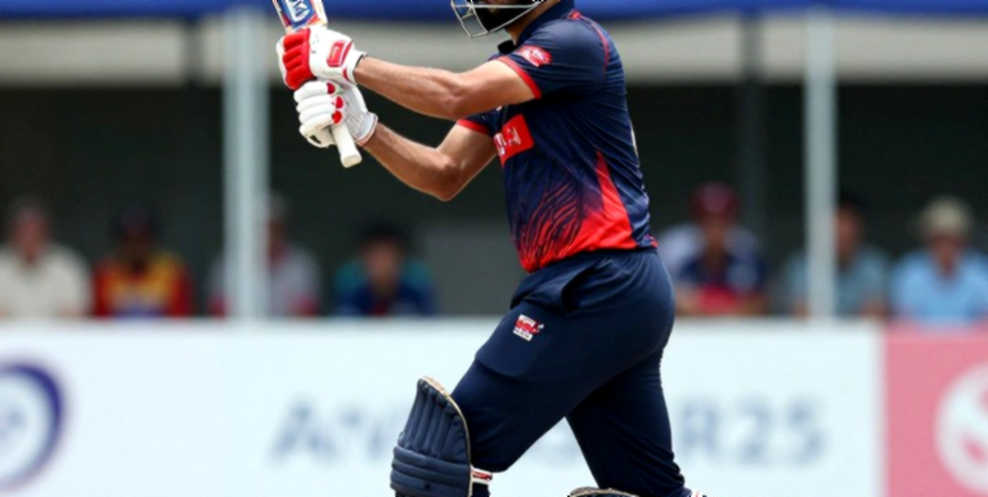
Now the question every reader asked and the original report never answered. How does a batter make 53 and another 41 inside a team total of 106 in six overs? In conventional cricket it is absurd. The answer is the 31-run retirement rule. A batter leaves at 31, the innings continues, and he returns. Abbas Afridi's 53 is 31 plus 22; Khawaja Nafay's 41 is 31 plus 10. Between them they added 94 of 106 — roughly ninety per cent of the total — and that is possible only because of the rule. It reads like a technical footnote; without it, the ordinary reader closes the scorecard believing it is wrong.
The same rule lit up the India game from the other side. India folded at 88/5, meaning their fifth and final pair had fallen. Pakistan chased with 91/2 in 3.5 overs — thirteen balls left, four wickets in hand. That is ninety-one runs in twenty-three deliveries, about twenty-four an over. In this format the distance between 'dominant win' and 'heavy defeat' is sometimes two overs, sometimes two balls.
And the real story, the one that never made a headline, sits in UAE versus India. India made 95. UAE made 96 without losing a wicket, in four overs — twenty-four an over, zero wickets, seventeen balls unused. In any cricket that is extraordinary; in six-a-side it looks almost impossible, because every bowler gets one over and no second chance. UAE won both matches against teams with bigger names and bigger crowds. Their top spot rests on two wins, not on a run-rate tiebreak.
Here a pause is necessary, because this is the most useful conclusion of the whole episode. Six overs, six players, one over per bowler — the structure is deliberate, built so results come fast and matches end in two and a half hours. The other side of that design is that it maximises randomness. One bowler's single over can cost twenty-plus runs or end the match, because he has no second over in which to repair anything. In fifty-over or twenty-over cricket a bad over is absorbed by later overs; here there is no absorption mechanism, only the next bowler. That is why Pakistan's last-ball defeat and their thumping win over India are not two separate truths but two ends of one story.
The direct consequence is that 'six-time champions eliminated' carries far less information than it appears to. In a fifty-over World Cup, a defending champion exiting at the group stage is an event, because seven or eight matches provide a sample and a pattern of decline becomes visible. Here the sample is two matches, twelve overs, seventy-two deliveries. Seventy-two deliveries can turn a team's fate twice. That is not evidence of Pakistan's weakness; it is the architecture of the format. Any analysis, whether a television headline or a first paragraph, should account for the fact that the 'upset' it names was always available within two deliveries.
The turn of the story now belongs to the team that won everything. UAE are the unbeaten side of Group C. Yet the available report names none of their players — not the batter who finished the chase on the last ball, not the pair who struck ninety-six in four overs against India, not a single bowler who took the ball while Pakistan's 106 went up. Look at the adjectives and the asymmetry sharpens. Pakistan's performance drew six warm modifiers: dominant, emphatic, aggressive, quickfire, comprehensive, convincing. UAE received remarkable and dramatic. This is not a slip of language but a reporting habit: the winner gets adjectives, the loser gets facts. Its cost is that a team with two wins from two passes through the page with no name attached. The first newsletter taught me that every score hides a name. Here the name is hidden entirely.
The second pause belongs to Pakistan's squad composition. Abbas Afridi and Khawaja Nafay are players counted in Pakistan's current or emerging national frame. If this was a development squad — and this is my inference, clearly flagged, since the report offers no basis — then the whole 'defending champions dethroned' frame does not sit properly. The six-title claim, equally, arrives from a single direction and should be confirmed against organisers' or board records; if that number fails, the basis of the report changes. I learned to hear the game in the silence of empty stands, and silence has one great limitation: it brings no source with it.
So what happens on Saturday? Pakistan move to the Plate semi-final against Hong Kong at 11:15 am PKT, which is 2:15 pm local time in Hong Kong. That is the practical point. Missing the main trophy does not end the tournament; the Plate route is open, and over the final two days it becomes the real examination of Pakistani cricket here.
Somewhere between the scoresheet and the player there is a very small space from which this whole affair makes sense. When the first ball is bowled against Hong Kong on Saturday, one question will be loudest: if a defending champion can exit on a single delivery, can we ever read a six-over result as form? Or must we accept that in this format winning is a skill while elimination is an accident — and if so, what exactly do we call ninety-six runs in four overs without a wicket, until somebody tells us the names of the four batters who made them?